Newsroom
Newsroom
23 January 2026, by Newsroom editorial office

Photo: UHH/Wichmann
On 22 January 2026, University of Hamburg representatives met their colleagues from the Netherlands. The collaboration with the University of Groningen, which has been a strategic partner since 2019, should be intensified in the future.
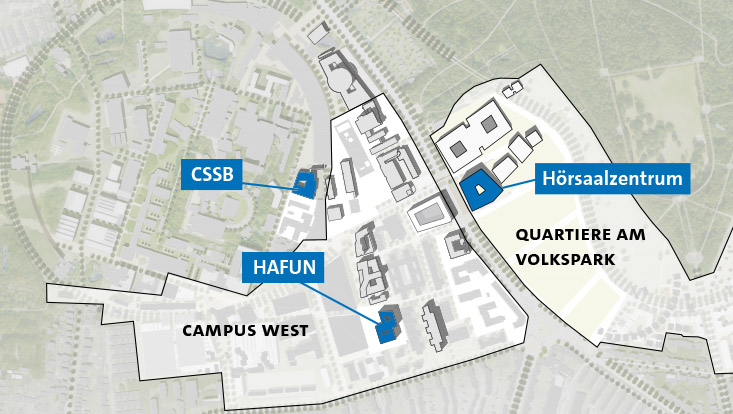
The delegation from Groningen, led by President Jouke de Vries, included deans, professors, and managers from different faculties and the central administration. During their visit, they met, among others, members of the Cluster of Excellence Climate, Climatic Change, and Society (CLICCS), the Faculty of Humanities, the Faculty of Mathematics, Informatics and Natural Sciences, and the degree program in the liberal arts. They also spoke with the vice president, Prof. Dr. Natalia Filatkina, and visited Science City Hamburg Bahrenfeld.
Groningen is one of the oldest and, with over 30,000 students, largest universities in the Netherlands. Its major research areas are psychology, medicine, business administration, ecology, and sociology, although within the scope of cooperation there are links to all of the University of Hamburg’s faculties.
This visit focused on the many joint projects that have been successfully realized since a strategic partnership was agreed upon in 2019: In the 4 joint calls alone, 21 projects were funded; there was a joint Synergy Grant project; and exchange programs in research and teaching.
There were also discussions about further cooperation possibilities, for example, deepening relations in climate and energy research, especially between CLICCS and the Wubbo Ockels School for Energy and Climate in Groningen. There is also marked interest in intensifying exchange in the humanities. As a first step, the universities will look at possibilities for joint doctoral programs.
There will also be greater joint efforts to build upon local and regional innovation ecosystems in Hamburg and Groningen, with members of industry and civil society involved. One important aspect is cooperation within the Impossible Founders initiative, for example, by organizing a joint summer school program for doctoral researchers. This is now set to be planned concretely.