
Education for Sustainable Development
Education for Sustainable Development is about preparing the next generation of learners to face complex societal challenges. The UNESCO Roadmap highlights ESD competencies designed to foster transformation across all sectors of society—competencies such as interconnected, critical, and forward-thinking, as well as creativity, empathy, and resilience. Education is viewed as an integral approach to achieving the UN Sustainable Development Goals, because “it empowers learners to make informed decisions and act responsibly” (UNESCO, 2017).
At the University of Hamburg (UHH), there is a rich and diverse range of courses across various departments that address sustainability in line with the 17 UN Sustainable Development Goals (SDGs): from climate science to peace education. A broad, interdisciplinary commitment and a wider discourse on sustainability have the potential to influence and transform society as a whole.
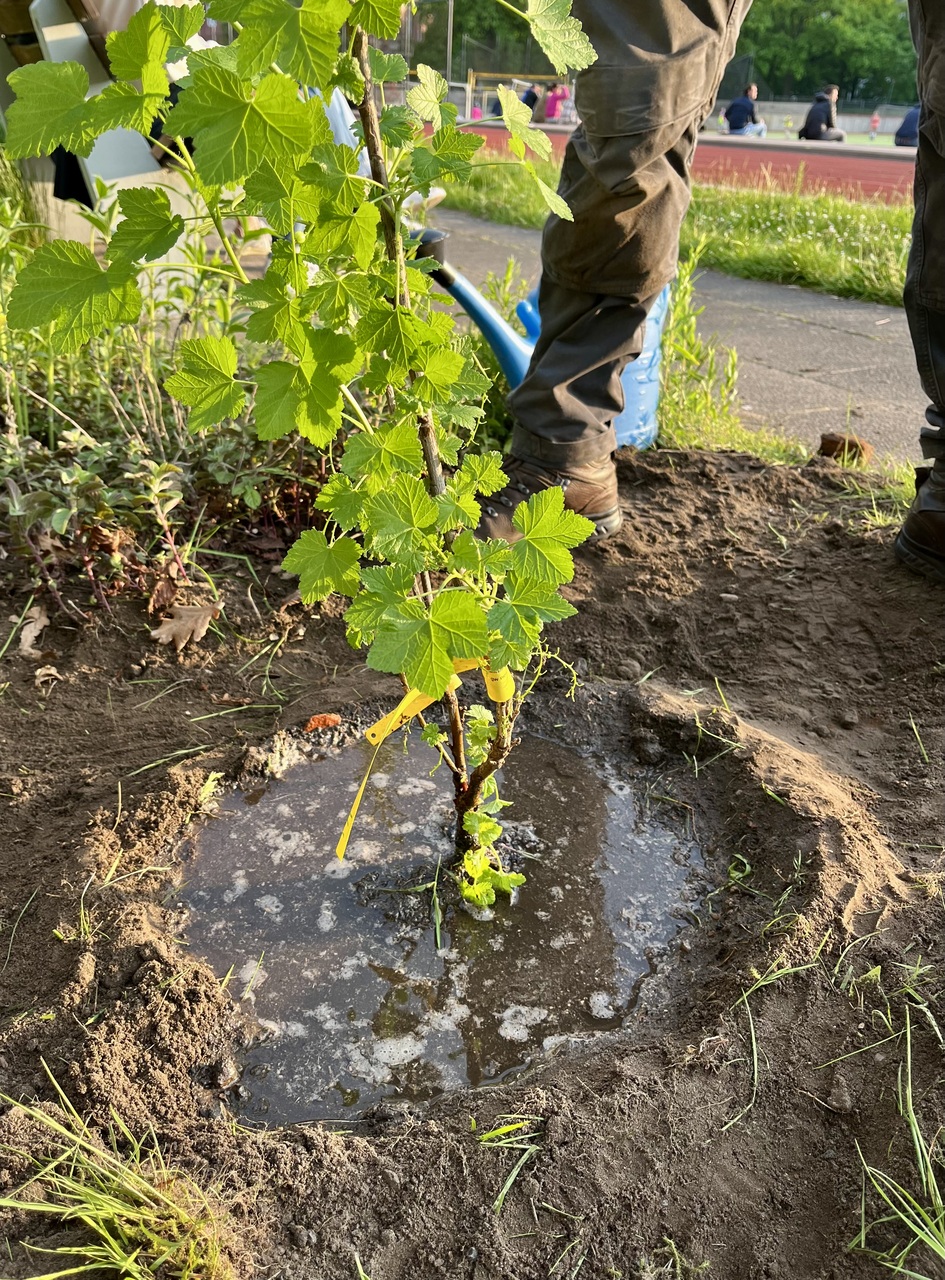
The Sustainability Office offers an interdisciplinary, holistic, and action-oriented Sustainability Certificate Program . The certificate explicitly recognizes the sustainability competencies acquired. A variety of teaching methods are employed that focus on open and constructive learning and promote learners’ ability to take action. Topics range from sustainability reporting to the practical promotion of biodiversity through the planting of wildflower meadows.
Program participants report that they find it interesting to see sustainability approaches outside their own disciplines—they value practical experiences (such as urban gardening) and real-life stories combined with scientific analyses of sustainability topics.
The Sustainability Office also develops digital sustainability content designed to lower barriers to accessing high-quality web-based education and to contribute to the UHH’s Twin Transformation.