Newsroom
Newsroom
8 October 2025, by Rödder/Red.

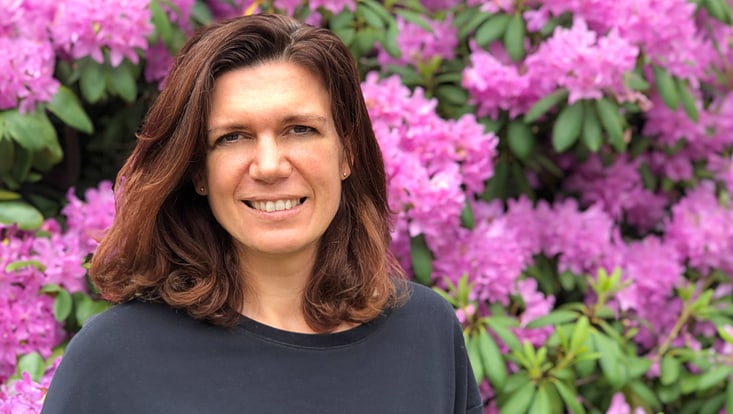
Photo: LIB/Pour
Every year, the University of Hamburg welcomes numerous new researchers. This series introduces them and their areas of research. This time: sociologist Prof. Dr. Simone Rödder
Prof. Dr. Simone Rödder has accepted a professorship in sociology with a focus on science communication and museum development, commencing in Winter Semester 2025/26 via a joint appointment with the Leibniz Institute for the Analysis of Biodiversity Change (LIB). Previously, Simone Rödder was a junior professor of sociology, in particular science studies, at the University. She is doing research in the Cluster of Excellence Climate, Climatic Change, and Society (CLICCS).
As a sociologist and researcher of science studies, I aim to understand the dynamics of science and society as social systems. How does scientific knowledge get special authority in our society and what types of communication are helpful? And what are the impacts on science, society, and sustainability solutions?
I want to establish how research work and results can help tackle problems such as climate change, biodiversity loss, or overcoming a pandemic. In all these cases, the actual problem is compounded by the fact that it is unclear how to talk about it and how to handle it politically. This makes for a second, a communicative crisis, that we need to understand much better.
The second phase of the Cluster of Excellence Climate, Climate Change, and Society will begin next January. Altogether, 19 disciplines are jointly researching the overarching question of which climate futures are possible and which are desirable. In the project Social Constructions of Climate Moods, which I am heading together with my colleague Michael Schnegg from ethnology, we will explore the role of emotions in imagining and realizing sustainable futures.
Supported by the Transfer Agency, our soil science team will continue to build a transdisciplinary knowledge transfer network on the future of fruit-growing soils in the Altes Land. My joint appointment with the LIB opens up great new cooperation opportunities in biodiversity research.
As the new head of the Centre for Knowledge Transfer at the LIB, I look very much forward to developing the various established science communication formats at the Natural History Museum together with my team in Bonn and Hamburg. The museums provide a unique space for dialogue between science and the public.
The main focus is on connecting my sociological research to applied biodiversity communication in museums. Research, teaching, and museum practice should enrich each other and learn from each other. Among other things, I will be initiating a new colloquium at which exciting guests from research and practice, will alternately present their perspectives and encourage discussion. We aim for a lively exchange that provides new impetus for research and communication.
In my courses, students can develop the skills and curiosity to ask scientific questions and analyze social transformations from a social science perspective. My often research-oriented seminars offer an opportunity to better understand the role of science communication in the complex interplay between science, publicity, and politics. In future, the Museum of Nature Hamburg will play a major role as a practice space.
A recent survey I published with a colleague from the University of Stellenbosch shows surprisingly few differences in the public perception of scientists in Germany and South Africa—a sign that the image of science is quite similar, not only in these 2 countries, but, presumably, all around the globe. Moreover, I was involved in a study led by colleagues from Harvard and Zurich, which examined the trust in scientists across 68 countries. I look forward to expanding these collaborations.
Science communication, just like climate change and the biodiversity crisis, is a wicked problem in itself—defying easy solutions. Sociological science communication research helps to understand how expertise impacts media, politics, law, and business and how it can be used to tackle social challenges.