Newsroom
Newsroom
5 September 2025, by Sack/Red.

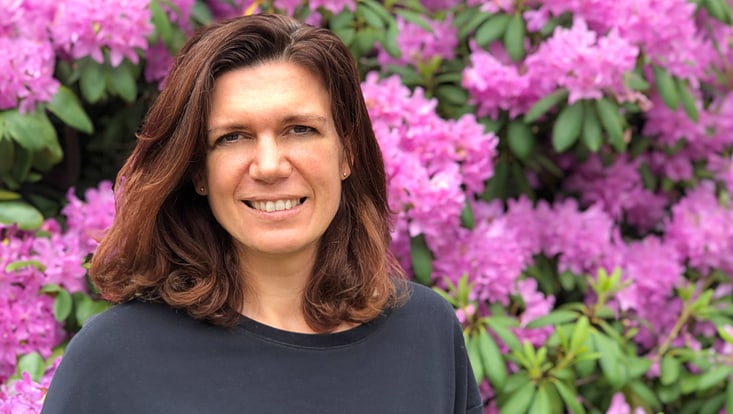
Photo: Claudia Bickel
Every year, the University of Hamburg welcomes numerous new researchers. This series introduces them and their areas of research. This time: theater educator Prof. Dr. Mira Sack
Prof. Dr. Mira Sack, previously at the Zurich University of the Arts, has joined the Faculty of Education as a professor of theater education.
Research in theater education is per se at home at the crossroads of different disciplines, methodologies, and discourses. Because theater education constitutively connects the artistic and social dimensions of how we act, research involves questions about aesthetic education in connection to social and social science theory; practical theater analysis and teaching; and aspects of teaching and educational philosophy.
At the moment, I consider the study and further development of performative, dialogue-oriented practices groundbreaking because that allows us to get directly involved in social transformation and to help shape social spaces.
Theater education should bring people together for critical discussions. Contact happens concretely via the body, the space, and fantasy and involves playing with possibilities, and experiencing, thinking about, and showing things in a different way. How can the learning process be made relevant to today’s societal challenges?
At the moment, I am especially concerned about the tendency towards division among different social groups. Polarization, which is increasing in the wake of globalization and becoming visible in violent conflicts, abuse of the environment, and a narcissistic selfishness, is threatening the future of our planet. The search for ways to turn these developments around and to effectively mediate between different fronts is a central challenge in teaching.
At school, especially, children and adolescents can be reached with regard to different value systems and engage with one another. This engagement should be understood as political and should contribute to growing maturity. It is important to me that theater education is less about acting technique and much more about interaction and critical reflection within the framework of artistic experimentation.
The 4,000 marbles that I bring with me. A drill. Some wire for different uses.
A major task will be to develop teaching of theater at all school levels, including in special needs education. I want the question about the future of education to inspire critical questions about well-practiced, familiar ways of thinking and being and to develop alternatives. My wish would be to position teacher training in Hamburg as an inspiration for the German-speaking discourse on theater as a school subject.
Good connections to the Hamburg University of Music and Drama, where the artistic disciplines are taught, are also very important to me as is close cooperation with the State Institute of Teacher Training and School Development, and of course, with schools, institutions for cultural education, and civic organizations in the City of Hamburg.
My expanding horizon: in the sky, in the cultural landscape, and professionally.