20 August 2025
Collaborative project on human remainsNew Guidelines for Schools on Dealing with Human Remains in Their Collections

Photo: Danse Macabre by Harald Naegeli 2020, Felix Thürlemann
In addition to providing an overview of the current situation and a historical, legal, and scientific-ethical classification, the guidelines focus primarily on how to handle human remains in a school context. Among other things, they explain how pupils can be involved in researching the relevant collections and deciding on their future. The guidelines also address the question of how human remains and the changing way society deals with them can stimulate classroom discussion on the topics of death and dealing with dead bodies.
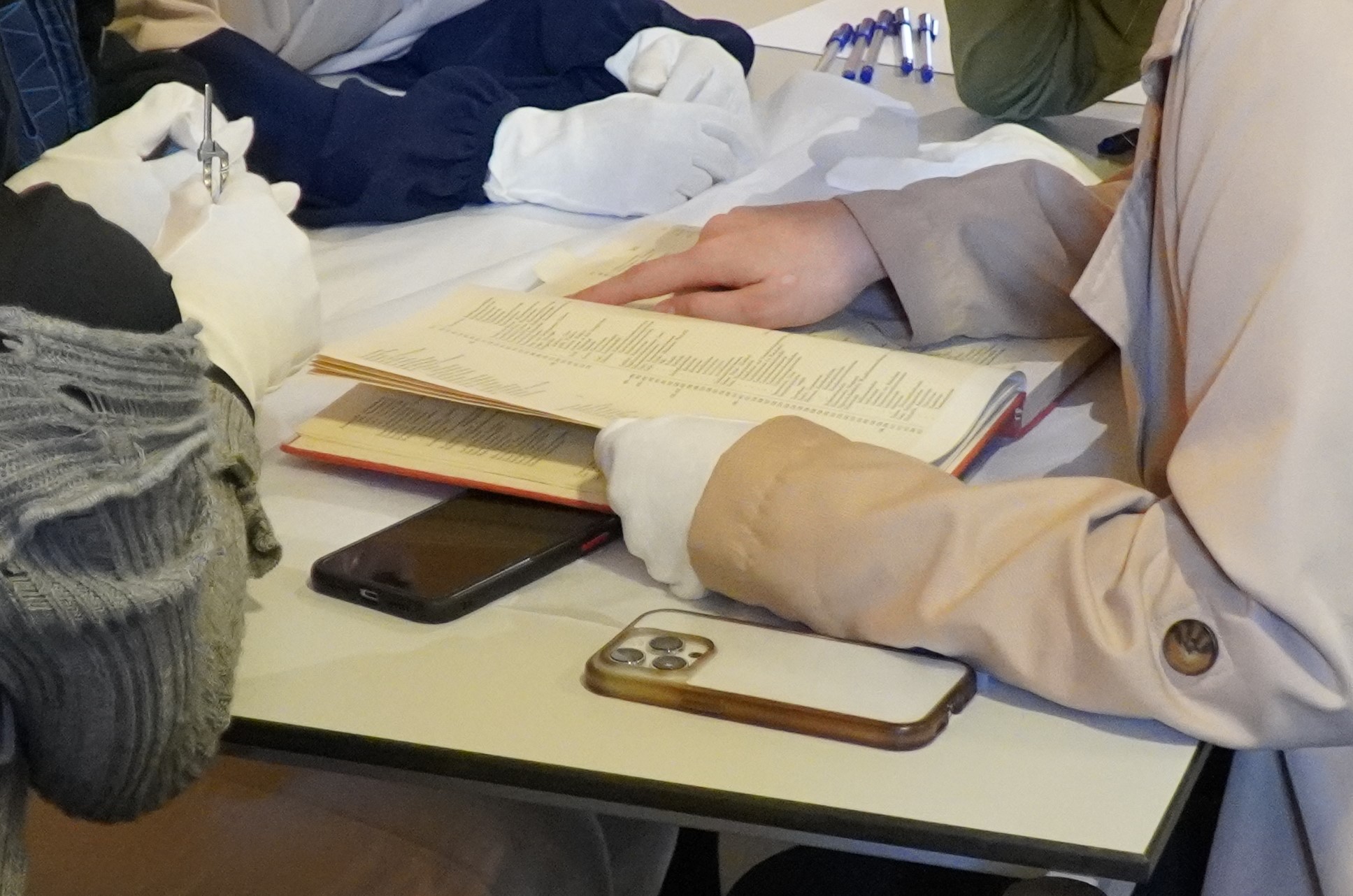
Three school groups from different grades took part in the HUMANS citizen science project in 2022 and 2023. Participants worked together to examine human remains using noninvasive methods and gained theoretical knowledge in workshops (e.g., on the basics of provenance research), which they were then able to apply at their own schools. They were supported by researchers from various disciplines, such as forensic anthropologist PD Dr. Eilin Jopp-van Well and medical historian Ralph Höger from the University Medical Center Hamburg-Eppendorf (UKE). All units were also reflected upon in intensive joint discussions.
Moreover, the open-ended design of the project allowed for individual extensions of the program. For example, one group visited a funeral home and spoke with employees about reverence in dealing with the deceased, while another group researched former educational material manufacturers as distributors of teaching materials made from human remains. In the guidelines, the authors describe in detail the questions the pupils dealt with, the developments that took place during the course of the project, and what needs to be considered when dealing with this topic. They finish with a discussion on how the guidelines can be integrated into the curriculum.
“It is not a matter of prescribing one, supposedly correct, way of dealing with these collections but rather of highlighting options for action and promoting an ethical discussion,” explains Dr. Antje Nagel, director of the University Museum. Dr. Nagel initiated the project together with Daniel Bein, head of education and outreach at the Museum of Nature of the Leibniz Institute for the Analysis of Biodiversity Change (LIB). The project’s manager, Lara Hemken, adds that “Pupils can be involved in this important topic, but such a discussion requires time, freedom, trust, and support from the teaching staff. The guidelines provide inspiration and important tips.”
The HUMANS project is a collaboration between the University of Hamburg, the LIB, the Institute of Legal Medicine at the UKE, the Museum of Medical History at the UKE, and the State Institute of Teacher Training and School Development (LI). It was funded for one year by the Ministry of Science, Research and Equality as part of the Science for Society state innovation program.
Even after the project has been completed, the processing of human remains in schools will continue to be actively supported. “In addition to the guidelines, which are available free of charge on the LI website, teaching staff can contact us at any time for information on the topic or advice on their own school projects,” says Lars Janning, head of the LI’s natural sciences section. The LIB also offers an overview of this topic through its Menschliche Überreste in Sammlungen von Museen und Schulen (Human remains in museum and school collections) program.
The guidelines are available free of charge on the websites of the University Museum, LI, and LIB.