
• Zur Metanavigation
  • Zur Hauptnavigation
  • Zur Suche
  • Zum Inhalt
  • Zur Subnavigation
  • Zum Seitenfuß
  • University of Hamburg
  • For journalists
  • Staff Service Portal0
  • STiNE
https://www.kus.uni-hamburg.de/aktuelles.json?recentnews=true
  • Institutions and target groups
    • Einrichtungen
      • Faculties

        • Faculty of Law
        • Faculty of Business, Economics and Social Sciences
        • Faculty of Medicine
        • Faculty of Education
        • Faculty of Humanities
        • Faculty of Mathematics, Informatics and Natural Sciences
        • Faculty of Psychology and Human Movement Science
        • University of Hamburg Business School
      • Services

        • Study Information Net STiNE
        • Surfmail
        • Exchange
        • Staff Service Portal
        • Learning Platforms
        • Katalogplus – Catalogue of Hamburg Libraries
        • SharePoint
      • Student facilities and services

        • Campus Center
        • Career Center
        • PIASTA
        • AStA (student council)
        • University Sports
        • University Music
        • Family Office
        • University Language Center
        • General Languages
        • Office of Affairs for Students with Disabilities or Chronic Diseases
        • Departmental libraries
        • Healthy Campus
      • Further facilities and services

        • The Cluster of Excellence CLICCS
        • The Cluster of Excellence CUI
        • The Cluster of Excellence Quantum Universe
        • The Cluster of Excellence Understanding Written Artefacts
        • Hamburg Research Academy
        • Pier Plus
        • Hamburg Center for University Teaching and Learning (HUL)
        • Hub for Crossdisciplinary Learning (HCL)
        • CEN
        • Museums and collections
        • University Archives (in German)
        • Regional Computing Center (RRZ)
        • University Administration
        • Knowledge Exchange Agency
        • The Unikontor Shop (in German)
    • Target groups

      • Prospective students
      • Students
      • International prospective students
      • Young researchers
      • Researchers
      • Instructors
      • Staff
      • Prospective continuing education students
      • Alumni
      • Journalists
      • Refugees (in German only)
    Close
  • Language
    • English
    • Deutsch
  • /en/newsroom/sitemap.json
University of Hamburg - to research, to teach, to educate and form, to homepage
Newsroom
Newsroom
  • Newsroom
  • Press releases
  • Social media
  • Videos
  • Events
  1. UHH
  2. Newsroom
  3. Press releases
  4. Press Releases 2013
  5. Marking of mRNA

24 June 2013

Illuminating genetic messengers:Scientists of Universität Hamburg develop method of marking mRNA
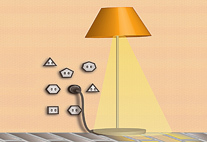
Wie Stecker und Steckdose: Sogenannte bioorthogonale Gruppen ermöglichen das Markieren der mRNA

Photo: D. Schulz

Wie Stecker und Steckdose: Sogenannte bioorthogonale Gruppen ermöglichen das Markieren der mRNA

Cells are the smallest and most important units of the human organism. Although their most decisive components have already been thoroughly examined, some are still hardly visible, such as ribonucleic acids (RNA). Mediating between genes and resulting traits they can also regulate cellular processes. There are numerous types of RNA with distinctive tasks. One is the messenger RNA (mRNA). It is a copy of the cell information that can be read by the cells essential protein factory called ribosome. As mRNAs can hardly be chemically distinguished from other RNAs, they could not be examined up close, e.g. under a micoscope. Now, researchers at Universität Hamburg's Institute of Biochemistry and Molecular Biology have developed a method  of illuminating cell mRNAs as described in the current international edition of Applied Chemistry.

Junior professor Dr. Andrea Rentmeister and the PhD students Daniela Schulz and Josephin Holstein used a reaction between two so-called bioorthogonal groups. Thus denoted artificial molecular changes do not occur in nature; they enable the researchers to identify certain cellular molecules and "switch them on." This system resembles a socket that can only be operated with one particular plug. Especially developed enzymes in the cellular mRNA equipped with this socket are thus marked.If a second bioorthogonal group plugs into this connecting unit, the mRNA becomes visible and can be tracked.

This method helps understand processes, such as learning and regenerating nerve cells, on a molecular level. The scientists have registered a patent for their method.

Link to the current international edition of "Applied Chemistry":

http://onlinelibrary.wiley.com/doi/10.1002/anie.201302874/abstract

http://onlinelibrary.wiley.com/doi/10.1002/anie.201304978/abstract

Für Rückfragen:

Jun.-Prof. Dr. Andrea Rentmeister
Universität Hamburg
Institut für Biochemie und Molekularbiologie
Tel.: 040 42838-8984
E-Mail: rentmeister"AT"chemie.uni-hamburg.de

Press release as PDF

  • Press releases

  • Press release archives
  • Mailing list for the press
  • Publications
  • Information for the media
  • Contact
  • Expert Service

Last update: 3 November 2015

  • Feedback
  • Legal notice
  • Privacy statement
  • Accessibility
  • Site map

University of Hamburg

Innovating and Cooperating for a Sustainable Future in a Digital Age

  • Instagram
  • Facebook
  • Bluesky
  • YouTube
  • LinkedIn
    • Studies
    • Prospective students
    • Continuing education
    • Research
    • Teaching at UHH
    • Doctoral studies
    • Job opportunities
    • Knowledge exchange
    • University
    • Excellence
    • Faculties
    • Alumni
    • Contact
    • Campus Navigator
    • Emergencies, safety and security
    • Antidiscrimination
audit familiengerechte hochschule
Audit
HRK-Audit
System accreditation

© 2025 University of Hamburg. All rights reserved

OBVZu9