• Zur Metanavigation
  • Zur Hauptnavigation
  • Zur Suche
  • Zum Inhalt
  • Zur Subnavigation
  • Zum Seitenfuß
  • University of Hamburg
  • For journalists
  • Staff Service Portal0
  • STiNE
https://www.kus.uni-hamburg.de/aktuelles.json?recentnews=true
  • Institutions and target groups
    • Einrichtungen
      • Faculties

        • Faculty of Law
        • Faculty of Business, Economics and Social Sciences
        • Faculty of Medicine
        • Faculty of Education
        • Faculty of Humanities
        • Faculty of Mathematics, Informatics and Natural Sciences
        • Faculty of Psychology and Human Movement Science
        • University of Hamburg Business School
      • Services

        • Study Information Net STiNE
        • Surfmail
        • Exchange
        • Staff Service Portal
        • Learning Platforms
        • Katalogplus – Catalogue of Hamburg Libraries
        • SharePoint
      • Student facilities and services

        • Campus Center
        • Career Center
        • PIASTA
        • AStA (student council)
        • University Sports
        • University Music
        • Family Office
        • University Language Center
        • General Languages
        • Office of Affairs for Students with Disabilities or Chronic Diseases
        • Departmental libraries
        • Healthy Campus
      • Further facilities and services

        • The Cluster of Excellence CLICCS
        • The Cluster of Excellence CUI
        • The Cluster of Excellence Quantum Universe
        • The Cluster of Excellence Understanding Written Artefacts
        • Hamburg Research Academy
        • Pier Plus
        • Hamburg Center for University Teaching and Learning (HUL)
        • Hub for Crossdisciplinary Learning (HCL)
        • CEN
        • Museums and collections
        • University Archives (in German)
        • Regional Computing Center (RRZ)
        • University Administration
        • Knowledge Exchange Agency
        • The Unikontor Shop (in German)
    • Target groups

      • Prospective students
      • Students
      • International prospective students
      • Young researchers
      • Researchers
      • Instructors
      • Staff
      • Prospective continuing education students
      • Alumni
      • Journalists
      • Refugees (in German only)
    Close
  • Language
    • English
    • Deutsch
  • /en/newsroom/sitemap.json
University of Hamburg - to research, to teach, to educate and form, to homepage
Newsroom
Newsroom
  • Newsroom
  • Press releases
  • Social media
  • Videos
  • Events
  1. UHH
  2. Newsroom
  3. In focus
  4. 2026
  5. Leibniz Prize

Leibniz Prize Awarded to Humanities Scholar from the University of HamburgEnriching Current Debates Through a Literary Lens

19 March 2026, by Christina Krätzig

Prof. Zumbusch bei der Preisverleihung

Photo: DFG/Ausserhofer

Among other things, she explores the interaction between literature and science: Leibniz Prize winner Prof. Dr. Cornelia Zumbusch at the award ceremony on March 18, 2026.

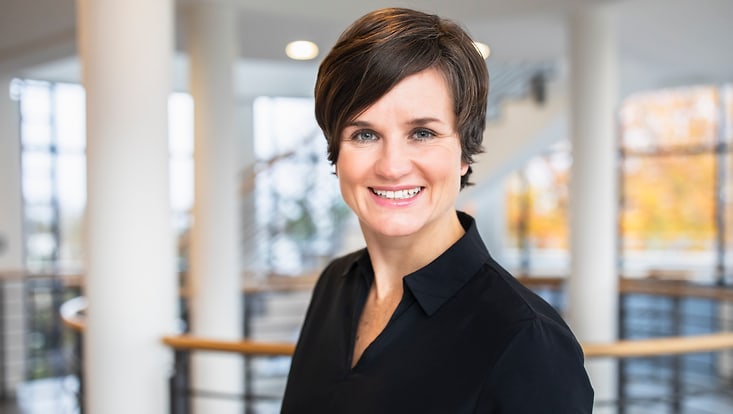
Prof. Dr. Cornelia Zumbusch of the University of Hamburg has been awarded Germany’s most prestigious research prize. The professor of modern German literature received the Gottfried Wilhelm Leibniz Prize for her work in the field of the poetics of knowledge.

Ms. Zumbusch, you have been recognized for your work on the knowledge of literature and the poetics of knowledge. What does the poetics of knowledge mean?

The poetics of knowledge means understanding literature as a distinct form of knowledge. My books "Immunity of the Classics", "Prehistory and Literature", and "Romantic Thermodynamics" explore the intersections between literature and science. I don’t just examine how literary texts relate to scientific discoveries or insights. I also look for rhetorical strategies and metaphors in scientific texts. Ultimately, I’m interested in what these forms of knowledge have to do with our present. So: How did the path to immunological modernity unfold? What did our entry into the current energy culture look like?

The Leibniz Prize comes with a prize of 2.5 million euros. You can spend this money over the course of seven years—do you already know what for?

The great thing is that I don’t have to commit to anything right away. That’s different from conventional research grants, for which you have to apply with a completed proposal. But actually, I already have some ideas. For example, I’d like to examine the role of literature in shaping feelings toward nature. What emotions are associated with the experience of nature? The emotional vocabulary of poetry ranges from pleasure and delight to awe or terror, all the way to sorrow or revulsion. Yet, especially in modernity, these feelings become more diffuse—and also more ambivalent. But one can also see how emotions are meant to be mobilized or instrumentalized. Such a history of nature emotions could contribute to current discussions about climate emotions or green emotions—and do so beyond polarizations like fear or hope.

Another topic would be the literary representation of care. Here, I’m interested in the tensions between different narratives and paradigms. After all, care work is still either socially repressed or romanticized as “love work.” My aim is to use literary history to shed light on the emotional, ethical, and political complexities of caring action.

At first glance, these topics seem very different. Or is this impression misleading?

Actually, they aren’t that far apart. There are currently discussions about whether Earthcare or concern for nature could serve as guiding concepts for ecology. But above all, my focus with both topics is on differentiation; on becoming attuned to nuances and contradictions. I believe that the potential of the humanities does not lie in proposing simple solutions.

Can this kind of work be done in a team?

Oh yes, in fact, it should be! While so-called individual research—that is, essays and books written by individuals—is very important in the humanities, exchange with others is a prerequisite for it. As co-spokesperson for the DFG Research Group “Imaginaries of Power”, I have established discussion forums together with my colleagues to discuss different topics and approaches. To this end, we invite fellows from all over the world every semester; in addition, there is an on-site team consisting of postdocs and doctoral candidates. I would love to set up a working group like this, though on a slightly smaller scale. It would be great if a postdoc position could take over part of my teaching load. As a literary scholar, I don’t need large-scale equipment or lab gear—but the prize money can buy me valuable time for my research. In that sense, the Leibniz Prize is truly a gift!

(This content has been translated automatically)
Latest articles

Symbolic picture for the European university alliance EUGLOH, in which a group of women hold up European flags

Photo: University of Hamburg / Göttling

15.01.2026|In focus
The University of Hamburg Assumes Presidency of EUGLOH in 2026
International exchange and networking: the University of Hamburg has been a member of the European University Alliance for Global Health for several years. At the beginning of 2026, it took over the annually rotating EUGLOH presidency.
Julia Reuschenbach

Photo: Tobias Koch

07.01.2026|In focus
“We need to draw more attention to the relevance of academia to society”
Dr. Julia Reuschenbach, one of the University of Hamburg’s first senior lecturers, joined the Faculty of Business, Economics and Social Sciences on 1 December 2025. She feels her role comes with various privileges and also sees the need for academics to go public.

Last update: 19 March 2026

  • Feedback
  • Legal notice
  • Privacy statement
  • Accessibility
  • Site map

University of Hamburg

Innovating and Cooperating for a Sustainable Future in a Digital Age

  • Instagram
  • Facebook
  • Bluesky
  • YouTube
  • LinkedIn
    • Studies
    • Prospective students
    • Continuing education
    • Research
    • Teaching at UHH
    • Doctoral studies
    • Job opportunities
    • Knowledge exchange
    • University
    • Excellence
    • Faculties
    • Alumni
    • Contact
    • Campus Navigator
    • Emergencies, safety and security
    • Antidiscrimination
audit familiengerechte hochschule
Audit
HRK-Audit
System accreditation

© 2026 University of Hamburg. All rights reserved

OBVZu9