Newsroom
Newsroom
13 May 2026, by Wolff/Red.

Photo: privat
The University of Hamburg is the scientific home to more than 6,200 researchers. Every 2 weeks, we offer a glimpse into their work as part of the “Research and Understanding” series in the Hamburger Abendblatt. In this edition, Prof. Dr. Wanja Wolff explains how our weaker self and physical exertion affect our performance.
I’m an avid amateur long-distance athlete, and I’ve always been fascinated by why we sometimes succeed better and sometimes worse at working toward long-term goals. For example, how do I manage to muster the energy needed to achieve a good result for myself in a half-marathon? It’s not enough to push myself just once; I have to do the right things over extended periods of time.
In my research, I examine how people manage performance in sports and other areas of life—that is, why we stick with it or give up. Above all, I want to find out how we deal with everyday feelings like boredom, exertion, or exhaustion in these situations and how we can use them strategically. What fascinates me most is the dynamic aspect: performance isn’t simply the time it takes me to run the half-marathon. Rather, it consists of the sum of many decisions regarding training time and volume, pace, running style, and so on.
When trying to solve a task as good as possible, feelings like boredom or exertion can strongly influence our decisions. For us, these are functional signals: they provide information about the cost-benefit ratio of current actions and influence whether we adjust our willingness to exert effort or look for more attractive alternatives.
In our “Dynamics of Human Performance Regulation Lab,” we combine psychological, neuroscientific, and sports science methods to investigate these processes of performance regulation under controlled laboratory conditions. Current projects, for example, focus on the interplay between effort and performance. Put simply, the question is whether people prefer to invest time and energy in short, intense bursts or in longer, less intense sessions to achieve a goal. Other projects investigate whether participants make better or worse decisions when they are bored. What sets our work apart is that we operate with high temporal resolution. This means we measure numerous parameters in the specific situation—such as hand strength, combined with skin conductance and pain stimulation, psychological questionnaires, and eye-tracking—and can correlate them in real time.
The closer we look, the clearer it becomes how individual the decision-making process is—and the result is sometimes changed immediately. Boredom is often underestimated in its complexity as a control signal. Our research shows that it can be a barrier to physical activity, but its course during exercise varies significantly from person to person. While some immediately look for alternatives, others try all the more to stick with the task. This requires additional effort, especially during simple tasks. In our experiments, people report a level of exhaustion from this extra effort that is similar to that experienced after completing a demanding task.
To work successfully toward one’s goals in the long term, it therefore seems particularly important not to design one’s training solely based on efficiency—such as running on a treadmill in the basement because it takes the least time. Rather, one should create a framework in which boredom plays as small a role as possible, for example through group training, varied training sessions and locations, or the deliberate search for forms of training that bring joy.
Effort holds similar potential. Despite more than a century of research on this sensation, there is still much to learn about exactly what effort is and how it influences our behavior. I am certain: performance regulation is such a complex issue that it will likely accompany me throughout my entire research career. And I’m staying on it!
(This content has been translated automatically.)
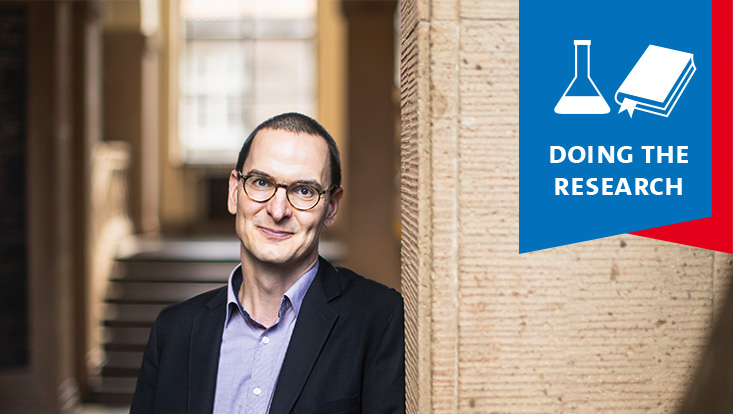
Prof. Dr. Wanja Wolff has been a professor of sports psychology at the Faculty of Psychology and Human Movement Science at the University of Hamburg since 2024. He heads the Dynamics of Human Performance Regulation Lab there. His personal training secret for the half marathon: Never skip the Thursday run with Nico.