
Newsroom
Newsroom
14 April 2026, by Krelle/Red.
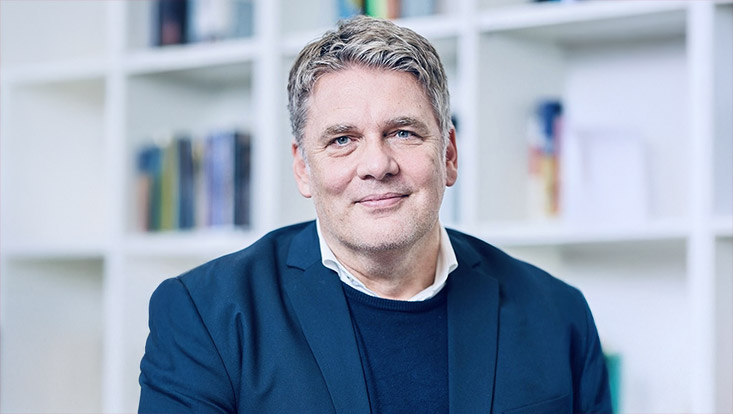
Photo: privat
Every year, numerous new researchers join the University of Hamburg. In this series, we introduce them and their fields of research. This time: education researcher Prof. Dr. Michael Krelle.
Prof. Dr. Michael Krelle joined the University of Hamburg from Chemnitz University of Technology in the summer semester of 2026 and assumed a professorship in the Didactics of German Language and Literature—Elementary Level at the Faculty of Education.
My research focuses on empirical German didactics, situated at the intersection of language education, literacy, assessment, and instructional development. I investigate how children develop linguistic and literacy skills and which learning environments are particularly helpful to them—both in the physical world and in the digital realm. One area of concentration is the development and testing of tools that enable teachers to assess students’ language proficiency levels and use this information to make concrete decisions regarding support.
Overall, my goal is to present empirical findings in a way that makes them effective in classroom practice and teacher education. In doing so, I am always interested in the following questions: Why do some children consistently benefit more from educational opportunities than others, even though they are in the same class? How are language requirements, resources, and school support interconnected? And in what ways do schools unintentionally reinforce existing inequalities? I now contribute my expertise to the Standing Scientific Commission of the Standing Conference of the Ministers of Education and Cultural Affairs of the Länder in the Federal Republic of Germany.
To be honest, I’ve had to explain this to my parents quite often, too. I always try to put it this way: As a researcher, I look at what children can already do linguistically in class—for example, when reading, writing, speaking, or listening—and what they still find difficult. Then I investigate what might be causing this: the instruction, the assignments, the materials, or the way we explain things. From all of this, I ultimately try to derive ideas on how to design instruction so that as many children as possible can keep up and continue learning in a good way.
In the field of education, several major challenges are currently overlapping; these are similar internationally but have different areas of concentration depending on the country. Central to me are, above all, issues of educational inequality, the quality of instruction, and the demands of digitalization. I would like to contribute my scientific expertise to precisely these debates.
Most recently, for example, our team developed LEON (Leseraum Online), a digital learning environment for elementary schools that is used by more than 150,000 people and through which we are embedding evidence-based methods for reading promotion in schools. Building on this, we are currently launching the so-called LES-O-METER—an AI tool that automatically provides teachers with feedback on students’ reading fluency as well as guidance on further support.
A treasure trove of children’s writing samples, an entire library of children’s books, and a deep passion for research and teaching.
At the national level, there are several collaborations with the Institute for Quality Development in Education as well as with the state institutes of the federal states, e.g., the Institute for School Quality of the State of Berlin and the Institute for Education Monitoring and Quality Development in Hamburg. These collaborations focus on issues of assessment and support, including with regard to “KERMIT (Competency Assessment) 2 and 3” and the Berlin Learning Trajectory. Transfer projects are underway with state ministries, such as the Ministry of Schools and Education of North Rhine-Westphalia.
Internationally, there are research collaborations with the Federal Institute for Quality Assurance in the Austrian School System regarding the so-called individual competency assessment “PLUS – iKMPLUS.”
When I’m greeted with “moin” on the street again and the weather on the radio is described as “patchy haze,” I know I’m home. Of course, I’m also very much looking forward to the subject-specific didactics and pedagogical environment and the many wonderful colleagues in Hamburg. There are already many professional contacts that I’d like to deepen and bring into joint projects. And finally, I’m naturally looking forward to the curious students and to teaching.

