Newsroom
Newsroom
14 July 2025, by Anna Priebe
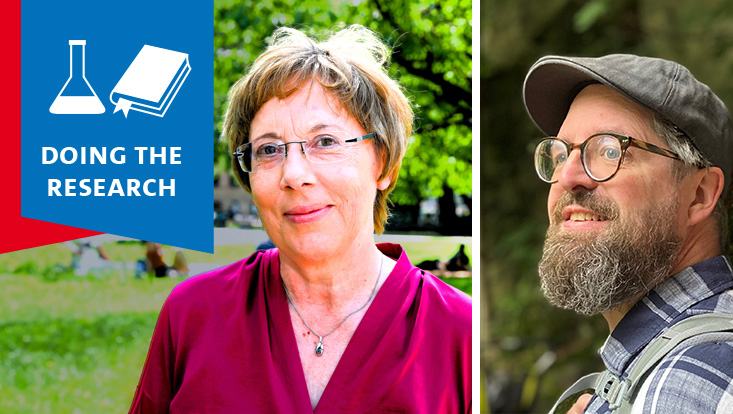
Photo: University of Hamburg / Beck (private)
Various laws promote the participation and inclusion of people with disabilities. However, particularly in the case of people with complex impairments, this is hardly ever achieved. In the IMPAK study, Prof. Dr. Iris Beck and Prof. Dr. Daniel Franz examined the conditions that enable individual freedom of action.
Beck: The term is less clear-cut than the wording suggests. Accordingly, other terms are also used, such as severe or multiple impairments. However, people also talk about “inclusion losers” or the “group that cannot be seen.” What this group has in common—and also a first key characteristic—is that their participation is particularly difficult and that they benefit little from reforms such as the UN Convention on the Rights of Persons with Disabilities.
A second characteristic is extensive functional impairment—for example, of cognition, vision, or motor skills—which is associated with further problems that do not necessarily arise from the primary impairment. This can affect emotional experience or communication, for instance. A third characteristic is a significant need for support in fundamental areas of their daily lives, and it is often difficult to find suitable support settings. Therefore, our goal was to gain a comprehensive picture of all the conditions that influence the implementation of inclusion and participation goals.
Beck: We no longer work with these terms. Our primary concern is that every support requirement is met irrespective of the label attached to the type of housing. If this is necessary 24 hours a day, it should not mean that the person has to live in a specific place and experience restrictions. Thus, we would refer to “inpatient” as an institutional orientation that severely limits the opportunities for an individual lifestyle. However, you can also find this in a service that is called “outpatient.”
Franz: At our 10 research sites, we tried to depict the diversity of needs and include different types of housing and care. Of course, we also wanted to reflect the whole country and took into account both urban and rural regions as well as large and small facilities.
Beck: First, we looked at the empirical research, because—so far—there is little in-depth knowledge about the living situations of people with complex impairments. For our study, we chose the so-called situational approach according to Ingeborg Nansen. Here, the focus is on the external conditions that influence an individual’s chances of leading an independent life.
Franz: Our research design covers all levels that influence living conditions. This starts with the federal states—as much of this area is organized at the federal level—and extends to service providers in the municipalities, the services they offer, their employees, and everyday life on-site. We had to find the right empirical instrument for each level and constantly compare the results.
Franz: At the first level, we conducted expert interviews in addition to our own research on social law fundamentals. At the locations, the first steps were a written survey and supplementary telephone interviews on the structures and processes on-site. This was followed by employee surveys.
Beck: We asked employees about their workload in general, which we supplemented with questions about how they deal with the particular challenges posed by complex impairments. This has not been done on a broad scale before.
Franz: Since many of these people are unable to communicate verbally, or can only do so to a very limited extent, and are thus often excluded from surveys, we resorted to participant observation. We obtained declarations of consent from all affected persons—or, where applicable, their legal guardians—and also repeatedly checked on-site to ensure that the observation was acceptable in the specific situation. If a person was visibly uncomfortable, we stopped and postponed the observation.
The service system must adapt to people as best as possible.
Beck: Participation is not an end in itself, and no one participates in everything everywhere; it is much more about access to areas of life and resources in order to be able to live an individual lifestyle. Here, we were able to identify conditions from the macro level of the federal states to everyday activities that open up or limit the scope for action.
Franz: I believe the idea that there is only one solution to the problem is wrong. Even at the level of the federal states, there are adjustments that make a difference. This starts with the overall assessment and planning of needs, which is handled very differently by the federal states and needs to be standardized from a scientific point of view. It is also crucial not to say that individuals with complex impairments do not fit into the system due to their needs; rather, the system must adapt to people as best as possible.
Where this is successful, social security departments and/or nursing care insurance providers are willing to finance a pilot project to determine whether something can be done differently. Alternatively, the room for maneuver available under social security law—which is contained in terms such as “appropriate” or “reasonable”—is exploited and one rule or the other is not applied so strictly. When the institutions providing the services also have the courage to try something new, opportunities and positive effects arise.
Beck: We are dealing with various areas of tension here: On the one hand, the overall concepts and textbooks say that the needs of the individual should be promoted. On the other hand, employees always look after a group—so they are expected to be flexible and provide individualized support while, at the same time, enabling fixed structures and processes for everyone.
Based on our data, we were able to statistically prove that employees’ qualifications make a significant difference when it comes to opening up opportunities for participation for people with complex impairments in this area of tension. Employees’ understanding of their roles is also crucial; however, many feel that they are unable to perform important tasks, and a significant proportion of employees have absolutely no room for maneuver to meet the requirements in full.
Beck: Yes, because these conditions—for example, management, cooperation, and communication structures or sufficiently qualified staff—have a huge influence on how employees can organize their work. This also applies to the premises. The size of a residential group, the number of people living there, and the design of the premises make a huge difference. Based on our findings, we believe that certain types of group settings must come to an end. This applies, for instance, to institutions with very large groups, which are associated with numerous structural constraints, as the employees there are unable to strike a balance between caring for a group and supporting individuals.
Franz: In our opinion, another crucial aspect at all levels is how hierarchical the organizations are structured. Do I have to go up 3 levels for every decision I want to make? Or do I have my own scope for decision-making? This includes structures as well as the provision of further training to enable professional development.
Beck: The locations that are doing better ensure that structural measures are in place to transfer concepts into practical action. On a personal level, there is also a growing recognition that employees’ actions have a direct impact on the well-being, integrity, and lifestyle of the people affected and that the well-being of both groups is closely linked. Ultimately, it is not the mission statements that appear somewhere on the home page that are decisive; rather it is the routines and structures that are lived out in everyday life. Here we see strong positive, but also negative, correlations for participation.
Beck: The project was funded by the Federal Ministry of Labour and Social Affairs, and we are in close contact with them about the findings. We are also active on various academic advisory boards to ensure that the findings are incorporated into participation reporting or into the guidance of the federal law on strengthening the participation and self-determination of people with disabilities (Bundesteilhabegesetzes). We also directly advise institutions and authorities that are facing this change process. In addition, we are preparing book contributions as well as content for the Qualitätsoffensive Teilhabe online platform, which provides tutorials, texts, and interviews aimed specifically at employees in the field.
The IMPAK project, which focuses on implementing participation and inclusion for people with complex impairments, was carried out at the University of Hamburg from 2017 to 2021 and funded by the Federal Ministry of Labour and Social Affairs. The research was led by Prof. Dr. Iris Beck, professor of general principles and sociology of specials needs education at the University of Hamburg, and Prof. Dr. Daniel Franz, professor of health-related social work at the Medical School Hamburg (MSH). The final project report was published by Kohlhammer Verlag in April 2025.
There are approximately 6,200 academics conducting research at 8 faculties at the University of Hamburg. Many students also often apply their newly acquired knowledge to research practice while still completing their studies. The Doing the Research series outlines the broad and diverse range of the research landscape, and provides a more detailed introduction of individual projects. Feel free to send any questions and suggestions to the Newsroom editorial office(newsroom"AT"uni-hamburg.de).