30 October 2025
The Lab of Tomorrow opens its doorsHands-On Research: The Potential of Microalgae

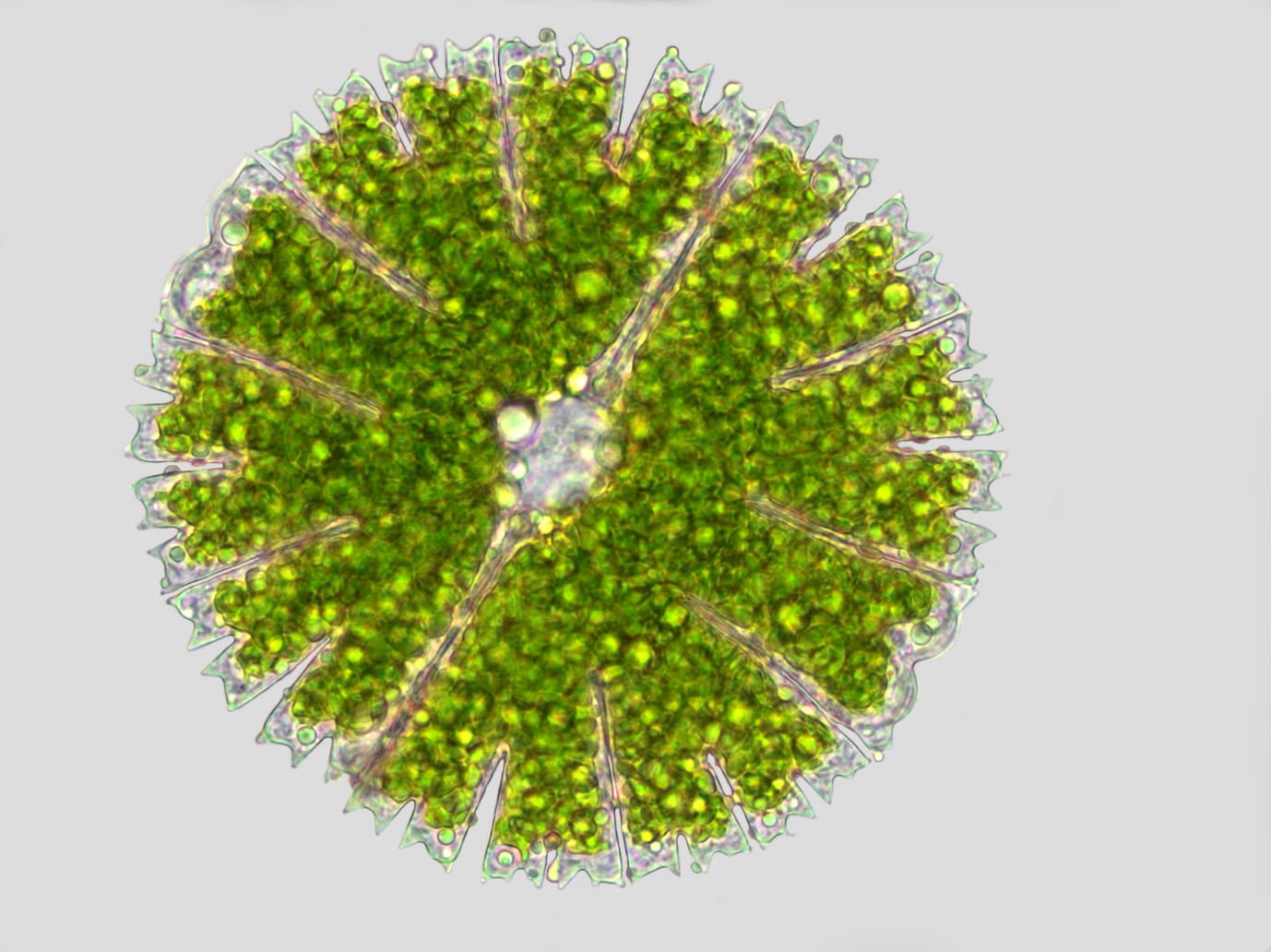
Photo: University of Hamburg / Esfandiari
How can microalgae contribute to a more sustainable future? This is the pivotal question for the new knowledge exchange project at the University of Hamburg. In the Lab of Tomorrow, which will open its doors in the University Museum, the spotlight—and the microscope—will focus on these tiny but multifaceted organisms. “Our goal is to create a place for everyone where we do research, think and discuss together,” said Dr. Antje Nagel, University Museum director and project initiator.
Microalgae: tiny organisms with enormous potential
Microalgae bond with carbon dioxide; produce oxygen; purify water; and can form the basis for biomatter. “Microalgae are miniscule solar-driven factories. In only a milliliter culture, millions of cells work synchronously to convert light, water, and carbon dioxide into valuable bonds that can also replace fossil fuels,” explained Dr. Abdelfatah Abomohra, who is providing scientific guidance on the project jointly with Prof. Dr. Dieter Hanelt. Both do research in the Department of Biology at the University of Hamburg and look at how algae can be used for the sustainable exploitation of energy and resources as well at to clean the environment. The basis of their research is the University of Hamburg’s microalgae collection.
The lab: experience and design basic research
“In the Algae Lab of the University Museum, visitors will now find a walk-in research lab designed like an exhibit, in which the potential of these ‘green jacks-of-all-trades’ are explained and rendered visible,” said the educational scientist Lara Hemken. Hemken designed the lab. Visitors are welcome to take an active part in discussions, experiments, or work on their own research interests. The program also includes workshops for different target groups and a lecture series with experts working in research and the climate and water economy. The series will evolve throughout the project. One program highlight is the “research-at-home” program: participants build their own, small bioreactors to cultivate microalgae, take them home, document their observations, and share them with researchers. You can sign up on the University Museum website.
The project is also involved in cooperation with a local Hamburg secondary school so that young people can “gain insight into the daily work of science,” said Nagel. “We want to bring science and society together through public participation in the Lab of Tomorrow. We would like not only for everyone to learn science but to also experience science,” Abomohra makes clear.
A place for future co-creation
The project is part of the Hamburg Ministry of Science, Research and Equality’s funding measure Calls for Transfer. The Lab of Tomorrow is being set up as an open space within the University, where the public can actively experience and design research. After the first project, the lab will remain and provide an opportunity for further interactive research projects at the University of Hamburg. The Algae Lab project will run until 30 April 2026.