
• Zur Metanavigation
  • Zur Hauptnavigation
  • Zur Suche
  • Zum Inhalt
  • Zur Subnavigation
  • Zum Seitenfuß
  • University of Hamburg
  • For journalists
  • Staff Service Portal0
  • STiNE
https://www.kus.uni-hamburg.de/aktuelles.json?recentnews=true
  • Institutions and target groups
    • Einrichtungen
      • Faculties

        • Faculty of Law
        • Faculty of Business, Economics and Social Sciences
        • Faculty of Medicine
        • Faculty of Education
        • Faculty of Humanities
        • Faculty of Mathematics, Informatics and Natural Sciences
        • Faculty of Psychology and Human Movement Science
        • University of Hamburg Business School
      • Services

        • Study Information Net STiNE
        • Surfmail
        • Exchange
        • Staff Service Portal
        • Learning Platforms
        • Katalogplus – Catalogue of Hamburg Libraries
        • SharePoint
      • Student facilities and services

        • Campus Center
        • Career Center
        • PIASTA
        • AStA (student council)
        • University Sports
        • University Music
        • Family Office
        • University Language Center
        • General Languages
        • Office of Affairs for Students with Disabilities or Chronic Diseases
        • Departmental libraries
        • Healthy Campus
      • Further facilities and services

        • The Cluster of Excellence CLICCS
        • The Cluster of Excellence CUI
        • The Cluster of Excellence Quantum Universe
        • The Cluster of Excellence Understanding Written Artefacts
        • Hamburg Research Academy
        • Pier Plus
        • Hamburg Center for University Teaching and Learning (HUL)
        • Hub for Crossdisciplinary Learning (HCL)
        • CEN
        • Museums and collections
        • University Archives (in German)
        • Regional Computing Center (RRZ)
        • University Administration
        • Knowledge Exchange Agency
        • The Unikontor Shop (in German)
    • Target groups

      • Prospective students
      • Students
      • International prospective students
      • Young researchers
      • Researchers
      • Instructors
      • Staff
      • Prospective continuing education students
      • Alumni
      • Journalists
      • Refugees (in German only)
    Close
  • Language
    • English
    • Deutsch
  • /en/newsroom/sitemap.json
University of Hamburg - to research, to teach, to educate and form, to homepage
Newsroom
Newsroom
  • Newsroom
  • Press releases
  • Social media
  • Videos
  • Events
  1. UHH
  2. Newsroom
  3. Press releases
  4. Press Releases 2016
  5. New exoplanet discovered

13 June 2016

Research team of astronomers at Universität Hamburg discovers new exoplanet
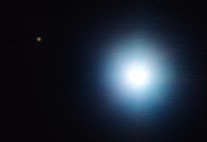
Exoplanet and parent star (pale spots on black background)

Photo: European Southern Observatory

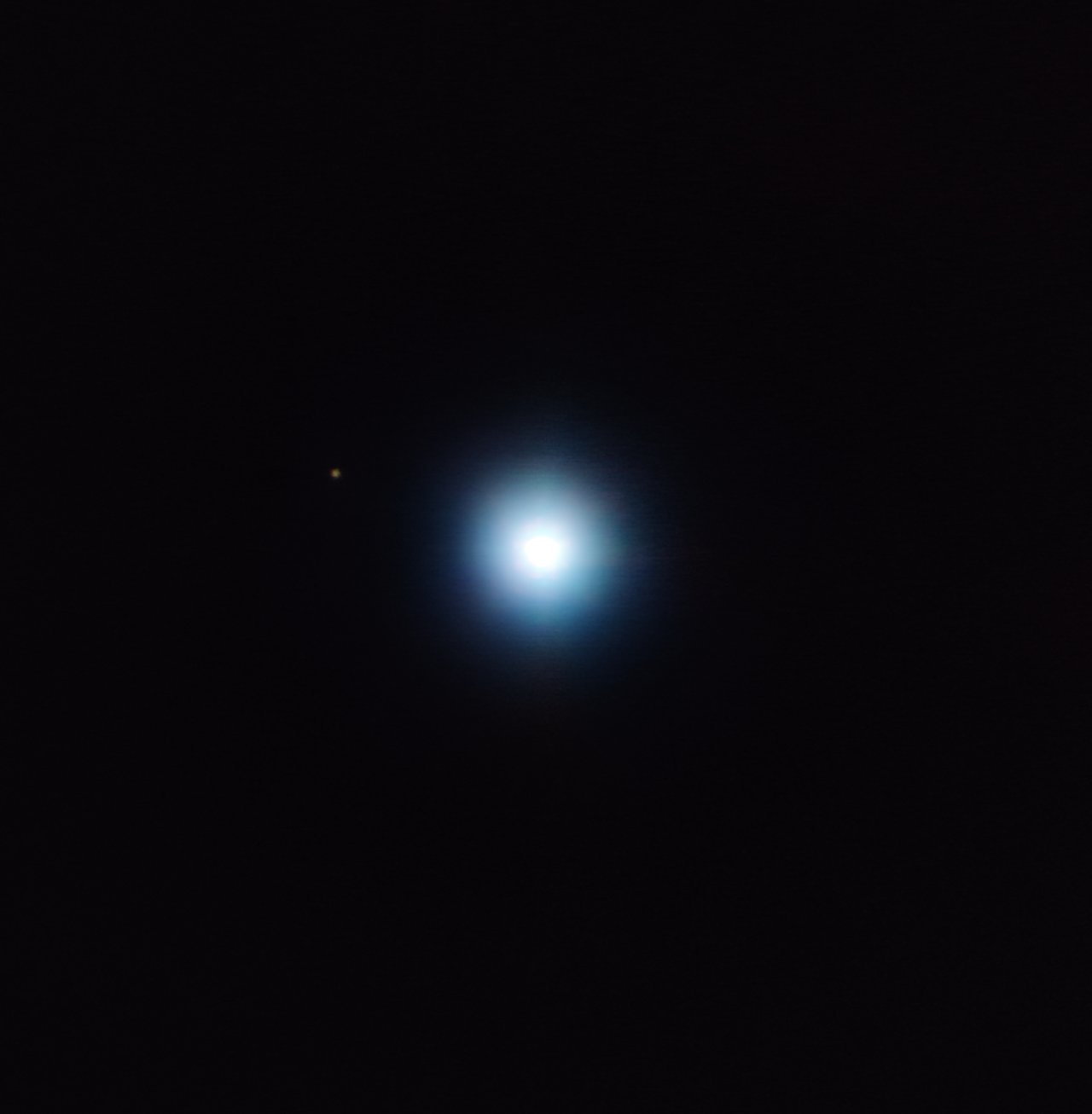
The exoplant CVSO 30c is the pale dot to the left above the star. The bright light source in the image is the parent star.
Our sun is orbited by the Earth and seven further planets. With the exception of Neptune, all of these planets are visible under good conditions to the naked eye. Planets outside of our solar system, known as exoplanets, are far more difficult to locate. A research group lead by Dr. Tobias Schmidt from the Hamburg Observatory in the Department of Physics at Universität Hamburg has succeeded in photographing an exoplanet directly using the Very Large Telescope (VLT) in the Atacama Desert in Chile.

Our sun is orbited by the Earth and seven further planets. With the exception of Neptune, all of these planets are visible under good conditions to the naked eye. Planets outside of our solar system, known as exoplanets, are far more difficult to locate. A research group lead by Dr. Tobias Schmidt from the Hamburg Observatory in the Department of Physics at Universität Hamburg has succeeded in photographing an exoplanet directly using the Very Large Telescope (VLT) in the Atacama Desert in Chile. The research group has reported its findings in the latest issue of the journal Astronomy and Astrophysics.

Read on in German . . .

Bislang konnte man die meisten Exoplaneten nur indirekt nachweisen: Wenn ein Exoplanet z. B. vor dem hellen Stern vorbeizieht, den er umkreist, und dessen Licht geringfügig abschwächt, kann diese Helligkeitsschwankung registriert und damit die Existenz eines Planeten nachgewiesen werden (die sogenannte Transitmethode). Bei der direkten Beobachtung wird der Exoplanet mit einem optischen Teleskop direkt abgebildet. Das VLT gehört zur Europäischen Südsternwarte (European Southern Observatory/ESO) und ist das höchstentwickelte optische Instrument der Welt. Es besteht aus vier Hauptteleskopen mit je 8,2 Metern Spiegeldurchmesser und vier beweglichen 1,8m-Hilfsteleskopen.

Das Forschungsteam hat mit dem VLT einen T Tauri-Stern namens CVSO 30 entdeckt, der sich ca. 1.200 Lichtjahre von der Erde entfernt, nordwestlich des Orion-Gürtels, befindet. 2012 wurde dort bereits durch die Transitmethode ein Exoplanet gefunden (CVSO 30b). Bei der erneuten, jetzt direkten Beobachtung mithilfe des VLT wurde der zweite Planet beobachtet. Er umkreist seinen Stern in einer Entfernung, die 662 Mal so weit ist wie die rund 150 Millionen Kilometer lange Distanz zwischen Erde und Sonne. Für einen Umlauf braucht dieser Planet mindestens 27.000 Jahre. Der im Jahr 2012 aufgespürte Exoplanet dagegen hat eine Umlaufzeit von weniger als 11 Stunden.

Der beobachtete Stern ist der erste, bei dem gleichzeitig ein sehr naher Exoplanet durch Transitbeobachtungen und ein sehr weit entfernter Exoplanet durch direkte Abbildung nachgewiesen werden konnten. Zurzeit ist unklar, wie ein solch exotisches System entstehen konnte. Möglich ist, dass beide Planeten sich z. B. in der Vergangenheit zu nahe kamen, sich dabei gegenseitig gestört haben und so zu ihren extremen Orbits um den Stern fanden. Derzeit sind 3.406 Exoplaneten in 2.550 Systemen bekannt.

Das VLT der ESO wird seit seiner Inbetriebnahme 1998 für eine Vielzahl von Projekten an der Hamburger Sternwarte benutzt. Die ESO wurde mitbegründet von Prof. Otto Heckmann, der von 1942 bis 1962 Direktor der Hamburger Sternwarte war. Die erste Hauptniederlassung der ESO befand sich in Hamburg-Bergedorf.

Originalveröffentlichung:

http://www.eso.org/public/archives/releases/sciencepapers/potw1624/potw1624a.pdf

Bildmaterial:

http://www.eso.org/public/images/potw1624a/?nolang
Download images

Exoplanet und Mutterstern (helle Flecken auf schwarzem Hintergrund)for screen display (JPG)for print purposes (JPG)
Der Exoplanet CVSO 30c ist der schwache Punkt links oberhalb des Sterns, die helle Quelle im Bild ist der Mutterstern selbst.
Picture: European Southern Observatory

Press release as PDF

  • Press releases

  • Press release archives
  • Mailing list for the press
  • Publications
  • Information for the media
  • Contact
  • Expert Service

Für Rückfragen:

Dr. Tobias Schmidt
Fachbereich Physik/Hamburger Sternwarte
Tel: +49 40 42838-8424
Email: tobias.schmidt"AT"hs.uni-hamburg.de

Last update: 14 June 2016

  • Feedback
  • Legal notice
  • Privacy statement
  • Accessibility
  • Site map

University of Hamburg

Innovating and Cooperating for a Sustainable Future in a Digital Age

  • Instagram
  • Facebook
  • Bluesky
  • YouTube
  • LinkedIn
    • Studies
    • Prospective students
    • Continuing education
    • Research
    • Teaching at UHH
    • Doctoral studies
    • Job opportunities
    • Knowledge exchange
    • University
    • Excellence
    • Faculties
    • Alumni
    • Contact
    • Campus Navigator
    • Emergencies, safety and security
    • Antidiscrimination
audit familiengerechte hochschule
Audit
HRK-Audit
System accreditation

© 2025 University of Hamburg. All rights reserved

OBVZu9