
• Zur Metanavigation
  • Zur Hauptnavigation
  • Zur Suche
  • Zum Inhalt
  • Zur Subnavigation
  • Zum Seitenfuß
  • University of Hamburg
  • For journalists
  • Staff Service Portal0
  • STiNE
https://www.kus.uni-hamburg.de/aktuelles.json?recentnews=true
  • Institutions and target groups
    • Einrichtungen
      • Faculties

        • Faculty of Law
        • Faculty of Business, Economics and Social Sciences
        • Faculty of Medicine
        • Faculty of Education
        • Faculty of Humanities
        • Faculty of Mathematics, Informatics and Natural Sciences
        • Faculty of Psychology and Human Movement Science
        • University of Hamburg Business School
      • Services

        • Study Information Net STiNE
        • Surfmail
        • Exchange
        • Staff Service Portal
        • Learning Platforms
        • Katalogplus – Catalogue of Hamburg Libraries
        • SharePoint
      • Student facilities and services

        • Campus Center
        • Career Center
        • PIASTA
        • AStA (student council)
        • University Sports
        • University Music
        • Family Office
        • University Language Center
        • General Languages
        • Office of Affairs for Students with Disabilities or Chronic Diseases
        • Departmental libraries
        • Healthy Campus
      • Further facilities and services

        • The Cluster of Excellence CLICCS
        • The Cluster of Excellence CUI
        • The Cluster of Excellence Quantum Universe
        • The Cluster of Excellence Understanding Written Artefacts
        • Hamburg Research Academy
        • Pier Plus
        • Hamburg Center for University Teaching and Learning (HUL)
        • Hub for Crossdisciplinary Learning (HCL)
        • CEN
        • Museums and collections
        • University Archives (in German)
        • Regional Computing Center (RRZ)
        • University Administration
        • Knowledge Exchange Agency
        • The Unikontor Shop (in German)
    • Target groups

      • Prospective students
      • Students
      • International prospective students
      • Young researchers
      • Researchers
      • Instructors
      • Staff
      • Prospective continuing education students
      • Alumni
      • Journalists
      • Refugees (in German only)
    Close
  • Language
    • English
    • Deutsch
  • /en/newsroom/sitemap.json
University of Hamburg - to research, to teach, to educate and form, to homepage
Newsroom
Newsroom
  • Newsroom
  • Press releases
  • Social media
  • Videos
  • Events
  1. UHH
  2. Newsroom
  3. Press releases
  4. Press Releases 2016
  5. New primate species named after biologist from Universität Hamburg

15 April 2016

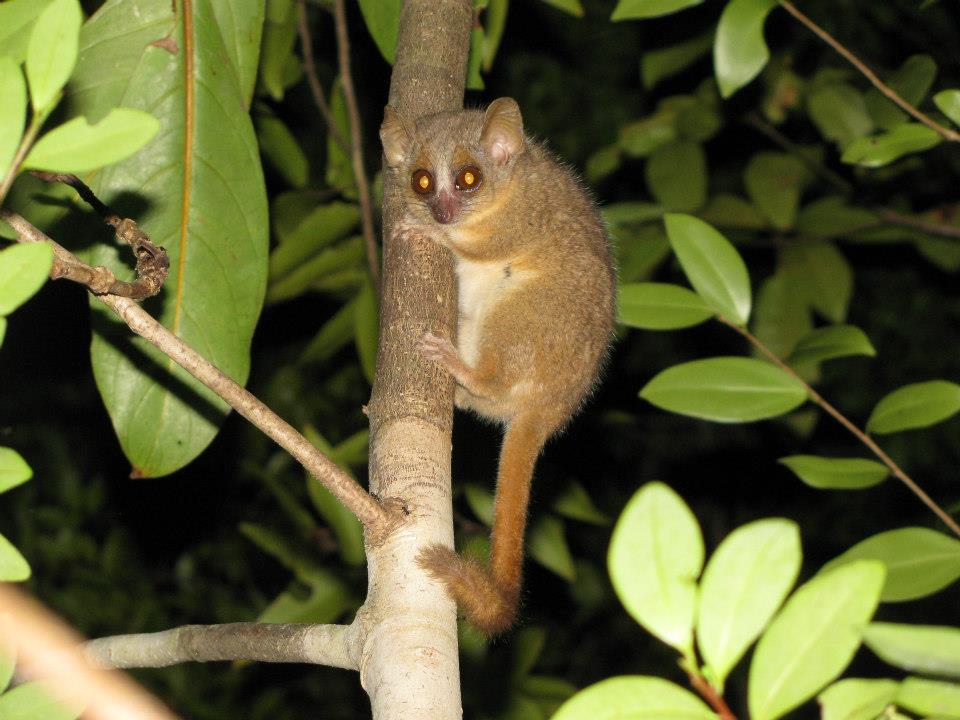
Microcebus ganzhorni:New primate species named after biologist from Universität Hamburg
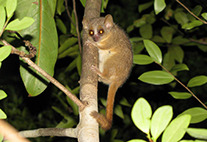
Microcebus ganzhorni

Photo: Giuseppe Donati

Microcebus ganzhorni ist im Südosten Madagaskars beheimatet
Hamburg biologist Jörg Ganzhorn received a special honor for decades of commitment to the protection of biodiversity and natural resources on the island of Madagascar off the southeastern coast of Africa: researchers from the German Primate Center (DPZ, Göttingen), the University of Kentucky (Lexington, USA), the Duke Lemur Center (Durham, NC, USA), and the Madagascan Université d’Antananarivo named a newly described lemur species after the professor of animal ecology from Universität Hamburg.

Hamburg biologist Jörg Ganzhorn received a special honor for decades of commitment to the protection of biodiversity and natural resources on the island of Madagascar off the southeastern coast of Africa: researchers from the German Primate Center (DPZ, Göttingen), the University of Kentucky (Lexington, USA), the  Duke Lemur Center (Durham, NC, USA), and the Madagascan Université d’Antananarivo named a newly described lemur species after the professor of animal ecology from Universität Hamburg. 

Read on in German...

Bei Microcebus ganzhorni handelt es sich um eine von drei neu beschriebenen Mausmaki-Arten, die im Südosten der vor Afrika gelegenen Insel beheimatet sind. Makis sind kleine nachtaktive Affen, die zur Teilordnung der Lemuren gehören. Diese kommen ausschließlich auf Madagaskar vor, werden zu den Primaten gezählt und zeichnen sich durch eine außergewöhnliche Artenvielfalt aus.

Mehr als 90 Prozent der Lemuren-Arten sind allerdings durch die Zerstörung ihres Lebensraums und aufgrund von Bejagung durch den Menschen vom Aussterben bedroht. Prof. Ganzhorn, der seit 1997 an der Universität Hamburg lehrt, setzt sich seit langem dafür ein, diese Primaten zu schützen. Zwischen 1993 und 1997 baute er für das Deutsche Primatenzentrum die derzeitige Feldstation auf Madagaskar auf und leitete von 1996 bis 2012 die für madagassische Primaten zuständige Gruppe der „Species Survival Commission“. Diese gehört zur „Internationalen Union zur Bewahrung der Natur und natürlicher Ressourcen“ (IUCN) und gibt unter anderem die Rote Liste gefährdeter Arten heraus.

Auch bei seiner Arbeit in Hamburg stehen Erforschung und Schutz von Lemuren sowie die Sensibilisierung der madagassischen Bevölkerung für die Artenvielfalt im Vordergrund. „Wir helfen auf der Insel zum Beispiel mit einem vom Bundesministerium für Bildung und Forschung geförderten Projekt dabei, Alternativen für die Landnutzung zu entwickeln und so das besondere Ökosystem und die Biodiversität zu erhalten“, erklärt Prof. Ganzhorn.

Das Projekt „Partizipative Forschung zur Unterstützung von nachhaltigem Landmanagement auf dem Mahafaly-Plateau in Süd-West-Madagaskar“ (SuLaMa) ist eine Initiative, an der sich mehrere deutsche und madagassische Universitäten sowie Nichtregierungsorganisationen beteiligen und in dem neben Biologinnen und Biologen auch die Fachdisziplinen Forst-, Wirtschafts- und Agrarwissenschaften sowie die Sozial- und Kulturwissenschaften vertreten sind. Vom 21. April bis zum 30. Juni 2016 wird eine Ausstellung im Foyer des Biozentrums Grindel (Martin-Luther-King-Platz 3) Einblick in die bisherigen Ergebnisse der Arbeit geben. Der Eintritt ist frei.
Download images

Microcebus ganzhornifor screen display (JPG)for print purposes (JPG)
Microcebus ganzhorni ist im Südosten von Madagaskar beheimatet
Picture: Giuseppe Donati

Press release as PDF

  • Press releases

  • Press release archives
  • Mailing list for the press
  • Publications
  • Information for the media
  • Contact
  • Expert Service

Last update: 15 April 2016

  • Feedback
  • Legal notice
  • Privacy statement
  • Accessibility
  • Site map

University of Hamburg

Innovating and Cooperating for a Sustainable Future in a Digital Age

  • Instagram
  • Facebook
  • Bluesky
  • YouTube
  • LinkedIn
    • Studies
    • Prospective students
    • Continuing education
    • Research
    • Teaching at UHH
    • Doctoral studies
    • Job opportunities
    • Knowledge exchange
    • University
    • Excellence
    • Faculties
    • Alumni
    • Contact
    • Campus Navigator
    • Emergencies, safety and security
    • Antidiscrimination
audit familiengerechte hochschule
Audit
HRK-Audit
System accreditation

© 2025 University of Hamburg. All rights reserved

OBVZu9