Newsroom
Newsroom
2 September 2025, by Antonia Hofmann

Photo: University of Hamburg / Weimer
The LEO study and the Programme for the International Assessment of Adult Competencies measure and literacy in adults. To mark the International Literacy Day on 8 September 2025, researchers at the University of Hamburg are publishing a special study that proves literacy is key to participating in the labor market and democracy.
Conducted by University of Hamburg researchers, LEO 2018 is the most detailed representative study on low adult literacy in Germany. The OECD study PIAAC (Programme for the International Assessment of Adult Competencies) aims for an international comparison of adult skills—including reading and writing skills. In a special study, researchers at the University’s Faculty of Education now analyzed the latest PIAAC data on how adult reading and writing skills developed between 2012 and 2023.
Results of the LEO PIAAC 2023 evaluation are: The proportion of people with low literacy in Germany, meaning low reading and writing skills, is stagnating at 20% in Germany— equaling 10.6 million adults between the ages of 16 and 65. Up to 2018, data from the LEO study had actually been indicating a significant positive trend in the development of reading and writing skills in Germany. The researchers believe this stagnation is due to multiple crises between 2018 and 2023, such as the pandemic. Stagnating or negative trends are also evident in international comparisons. In Austria, for example, the proportion of low adult literacy rates rose from 16% in 2012 to 27% in 2023.
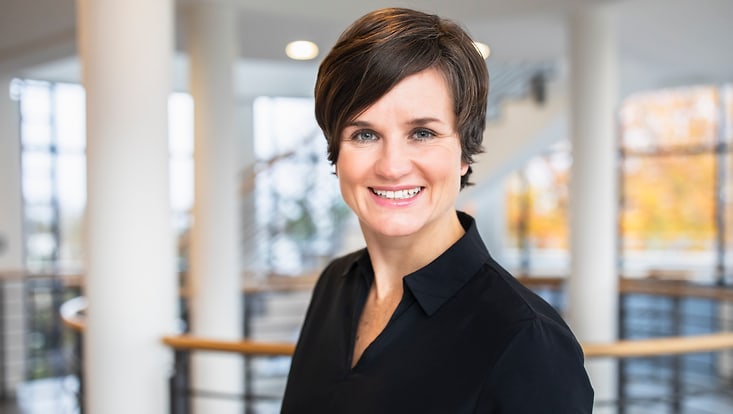
“We conducted this analysis because these findings are crucial for the National Decade for Literacy and Basic Education ending in 2026,” says Prof. Dr. Anke Grotlüschen, a professor of lifelong learning and head of the LEO studies and the LEO PIAAC 2023 special study. In particular, the results show how important literacy is for political self-efficacy and democratic participation: “You need reading and writing skills to critically question information and shape your own political beliefs,” says Grotlüschen.
As regards political self-efficacy, meaning the perceived capacity to influence your country’s political system, a comparison of the 3 analyzed countries paints a mixed picture: In Germany, 17% of adults with low literacy skills agree with the statement on perceived political self-efficacy (versus 33% of adults with higher literacy skills) In Austria, 16% of people with low literacy believe they are listened to by the government (versus 18% with higher literacy). The Austrian numbers are remarkably close and low. In Switzerland, figures are significantly higher: 42% of adults with low literacy report political self-efficacy, compared to 64% of percent of adults with higher literacy.
Labor market integration was part of the secondary analysis research. Findings show that labor market participation of low-literate adults did not increase any further between 2018 and 2023 but stagnated at about 60 percent in Germany and Austria. In Switzerland, it is 74%. Moreover, in Germany, apparently 18% of people with low literacy skills remain in unskilled employment, compared to only 3% of those with higher literacy skills. A further 40% of those with low literacy work in so-called blue-collar jobs, meaning manual labor or handicraft.
“The LEO PIAAC 2023 special study, conducted by an international research team using zero-based budgeting, cannot replace an LEO study. But in light of the National Decade ending in 2026, the LEO PIAAC results are particularly relevant, because they show that German education policy has protected us from skill loss—not least because it is based on research,” says Prof. Grotlüschen.
The researchers, together with the Hamburger Volkshochschule (adult education center), will present the LEO PIAAC 2023 special study on International Literacy Day, 8 September 2025. This second joint symposium will also present literacy and basic education projects conducted by Hamburg-based organizations and academia. Among others, Hamburg’s Senator for Schools Ksenija Bekeris will discuss approaches for transparent development of basic education in Hamburg. Prof. Dr. Natalia Filatkina, vice president for studies and teaching at the University of Hamburg will give the welcoming speech: Find further details on the Literacy in Diversity Settings website.
LEO
The study LEO 2018 provides information on age, gender, origin, family and employment status as well as education and vocational training of people with low reading and writing skills in Germany. The study also examines how low reading and writing skills affect everyday and social participation opportunities. It was funded by the Federal Ministry of Research, Technology and Space (formerly called Federal Ministry of Education and Research) with roughly €2.5 million.
PIAAC
In Germany, PIAAC is funded by the Federal Ministry of Education, Family Affairs, Senior Citizens, Women and Youth with the participation of the Federal Ministry of Labour and Social Affairs. GESIS—Leibniz Institute for the Social Sciences has managed the PIAAC project from 2018 to 2025.