• Zur Metanavigation
  • Zur Hauptnavigation
  • Zur Suche
  • Zum Inhalt
  • Zur Subnavigation
  • Zum Seitenfuß
  • University of Hamburg
  • For journalists
  • Staff Service Portal0
  • STiNE
https://www.kus.uni-hamburg.de/aktuelles.json?recentnews=true
  • Institutions and target groups
    • Einrichtungen
      • Faculties

        • Faculty of Law
        • Faculty of Business, Economics and Social Sciences
        • Faculty of Medicine
        • Faculty of Education
        • Faculty of Humanities
        • Faculty of Mathematics, Informatics and Natural Sciences
        • Faculty of Psychology and Human Movement Science
        • University of Hamburg Business School
      • Services

        • Study Information Net STiNE
        • Surfmail
        • Exchange
        • Staff Service Portal
        • Learning Platforms
        • Katalogplus – Catalogue of Hamburg Libraries
        • SharePoint
      • Student facilities and services

        • Campus Center
        • Career Center
        • PIASTA
        • AStA (student council)
        • University Sports
        • University Music
        • Family Office
        • University Language Center
        • General Languages
        • Office of Affairs for Students with Disabilities or Chronic Diseases
        • Departmental libraries
        • Healthy Campus
      • Further facilities and services

        • The Cluster of Excellence CLICCS
        • The Cluster of Excellence CUI
        • The Cluster of Excellence Quantum Universe
        • The Cluster of Excellence Understanding Written Artefacts
        • Hamburg Research Academy
        • Pier Plus
        • Hamburg Center for University Teaching and Learning (HUL)
        • Hub for Crossdisciplinary Learning (HCL)
        • CEN
        • Museums and collections
        • University Archives (in German)
        • Regional Computing Center (RRZ)
        • University Administration
        • Knowledge Exchange Agency
        • The Unikontor Shop (in German)
    • Target groups

      • Prospective students
      • Students
      • International prospective students
      • Young researchers
      • Researchers
      • Instructors
      • Staff
      • Prospective continuing education students
      • Alumni
      • Journalists
      • Refugees (in German only)
    Close
  • /en/newsroom/sitemap.json
University of Hamburg - to research, to teach, to educate and form, to homepage
Newsroom
Newsroom
  • Newsroom
  • Press releases
  • Social media
  • Videos
  • Events
  1. UHH
  2. Newsroom
  3. In focus
  4. “Cuban Missile Crisis in Slow Motion”

The North-Korea Conflict is Like the Cuban Missile Crisis in Slow MotionAn interview with Prof. Götz Neuneck from the Institute for Peace Research and Security Policy (IFSH)

28 November 2017, by Daniel Meßner

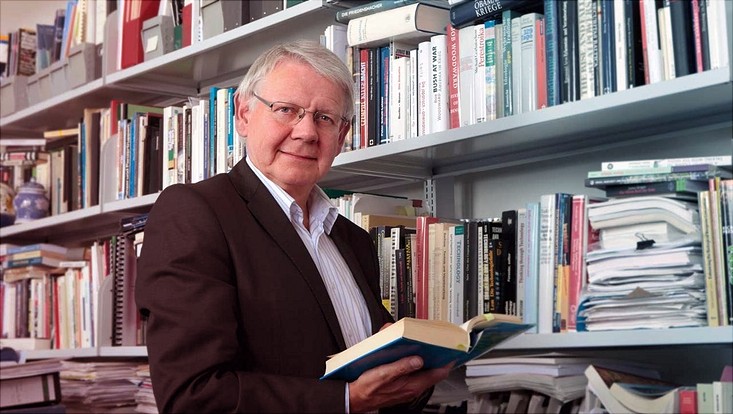
Prof. Dr. Götz Neuneck

Photo: IFSH

Tensions continue to grow between North Korea and the United States and there is no resolution in sight. In this interview, physicist and peace researcher Prof. Dr. Götz Neuneck talks about the dangers of and potential solutions to the conflict with North Korea.

What role does research play when dealing with these kinds of international conflicts? How can research contribute to a solution?

Peace and conflict researchers can analyze conflict situations more precisely, posit models for international negotiations, and prepare concrete recommendations for conflict resolution.

As a physicist, I ostensibly do research on nuclear weapons and missile capability. To do that, you need to understand how nuclear weapons can be built and what capabilities countries have in the future based on their missile tests.

I am also the German representative to the Pugwash Conference on Science and World Affairs, which has taken place annually since 1957. Named after the first meeting place in Pugwash, Canada, this is an international conference at which researchers discuss the dangers of the atomic age and how to avoid them. The Pugwash Organization was awarded the Nobel Peace Prize in 1995 and it has repeatedly opened channels to communication with North Korea.

How threatening is the current situation in your opinion?

Experts have long been saying that North Korea is the Cuban Missile Crisis in slow motion. Since the last underground nuclear tests and the last two missile tests, North Korea seems determined to build up its nuclear deterrent potential. In the next five years, the tested missiles could conceivably carry nuclear warheads all the way to the United States. This would cross the United States’ “red line.”

Trump’s contradictory rhetoric neither alleviates nor solves the problem and it doesn’t follow any clear policy. Three aircraft carriers in the US Navy fleet are now conducting military exercises and the show of force continues to grow.

One can only hope that neither side loses its head. An overreaction, an accident, or a misunderstanding can, indeed, result in dangerous escalation. A war in the region would have immediate consequences for South Korea, China, or Japan. On the the other hand, no one truly wants a war that even with conventional forces would lead to countless deaths in the region.

You have already examined many conflicts. What, in your opinion, is special about this one?

The special thing about this is undoubtedly the existence of nuclear weapons; the old ideological separation of Korea into North and South; the regional situation in Korea and Japan; and the global situation, for example in the United States, China, and Russia.

Moreover, the fact that the brutal Korean War at the beginning of the 1950s marked the dawn of the Cold War and to date no acceptable solution to Korea has been found. The North Korean regime strikes many people as strange but it rests on the development of the East-West confrontation.

The regime is supported primarily by its military, uses Stalinist rhetoric, and keeps its own starving population under lock and key. Propaganda, brain-washing, and re-education are the people’s daily bread. Even China, North Korea’s immediate ally, has little influence on the government. Kim Kong Un has not left the country or greeted other national leaders. North Korea is a black hole in the global age. By Western standards, it’s bizarre.

What possible solutions do you see at the moment?

We need to seek dialog. North Korea, of course, would like political and economic guarantees. Furthermore, China and neighboring states need to be involved. One of Korea’s demands is that the military exercises cease. This is one way for both sides to ease the conflict and lay the cornerstones for negotiations. But it won’t be easy because North Korea wants to keep its nuclear arsenal, which it sees as a guarantee for the regime’s survival.

Latest articles

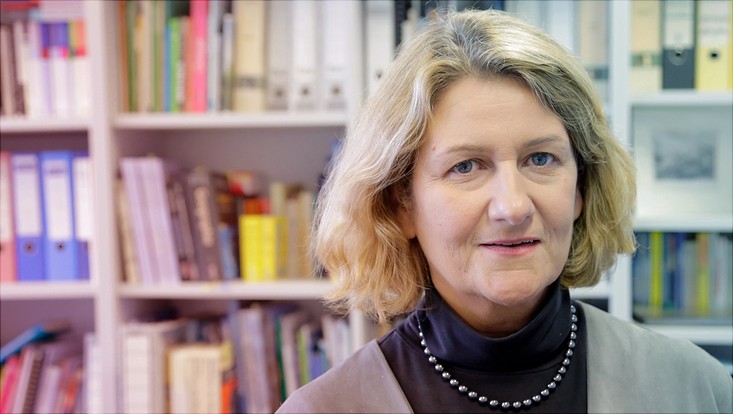
Prof. Dr. Beate Ratter

Photo: UHH/Schöttmer

15.11.2017|In focus
UN Climate Change Conference: Island states can also do something to mitigate the effects of climate change
This year Fiji presided over the UN Climate Change Conference (COP 23). The island nation is already struggling with the effects of climate change: for example, 45 villages have had to be resettled due to rising sea levels. Prof. Dr. Beate Ratter researches the ways island nations adapt to climate...
Prof. Dr. Grischa Perino

Photo: UHH/RRZ/MCC/Mentz

14.11.2017|In focus
UN Climate Change Conference: Lower emissions on our roads and fields more effective than phasing out coal
Delegates from all over the world have convened in Bonn to agree on common goals to combat climate change and to develop a system that allows us to measure the contributions made by individual states. Once upon a time, Germany was regarded internationally as a leader in combating climate change. Now...

Last update: 28 December 2017

  • Feedback
  • Legal notice
  • Privacy statement
  • Accessibility
  • Site map

University of Hamburg

Innovating and Cooperating for a Sustainable Future in a Digital Age

  • Instagram
  • Facebook
  • Bluesky
  • YouTube
  • LinkedIn
    • Studies
    • Prospective students
    • Continuing education
    • Research
    • Teaching at UHH
    • Doctoral studies
    • Job opportunities
    • Knowledge exchange
    • University
    • Excellence
    • Faculties
    • Alumni
    • Contact
    • Campus Navigator
    • UHHApp
    • Emergencies, safety and security
    • Antidiscrimination
audit familiengerechte hochschule
Audit
HRK-Audit
System accreditation

© 2026 University of Hamburg. All rights reserved

OBVZu9