Newsroom
Newsroom
28 October 2026, by Engels/Red.
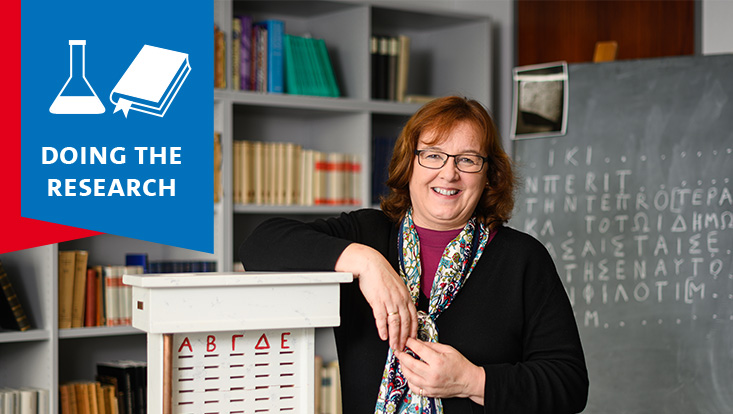
Photo: F. Thane
The University of Hamburg is the scientific home to more than 6,200 researchers. Every 2 weeks, we offer a glimpse into their work as part of the “Doing the research” series in the Hamburger Abendblatt. In this edition, Anita Engels explains what to do when climate policy stalls.
When it comes to climate protection, there is a wide gap between aspiration and reality: Human-caused emissions continue to rise, the Earth is warming, and heat waves like the one last summer are claiming lives in Germany as well. At the same time, political ambition to achieve legally binding climate targets is noticeably waning. There are even setbacks in the expansion of wind and solar energy and in the phase-out of coal, oil, and gas.
Research approaches the problem from two perspectives: Many disciplines show that climate protection has long been technically feasible and that today’s investments are significantly cheaper than tomorrow’s damages if global warming continues unchecked. The social sciences, in turn, are particularly well-suited to explaining why this necessity does not automatically lead to climate protection: It is due to power structures in society, the still-enormous profits from fossil fuels, and subsidy programs and laws that all point too little toward climate protection. So we know very well what needs to happen, but we can also explain very well why, unfortunately, it isn’t happening.
In particular, the way we produce and consume goods and services stands in the way of climate protection. And the money flowing into fossil fuel businesses shows no sign of drying up. While the so-called divestment movement has persuaded some institutional investors to invest their money more sustainably, major investors are now once again channeling their funds more freely into fossil fuels. New deposits are being developed, even though this should have stopped long ago.
But those who understand exactly why climate protection is failing can also identify where progress can be made. From our research on the specific barriers and drivers of the climate transition, we can identify critical points where people can take targeted, collective action. Through climate lawsuits, for example, they can compel governments and companies to do more to protect the climate. They can persuade major investors—such as churches, pension funds, or insurance companies—to genuinely withdraw their capital from fossil fuel investments. Local residents themselves can drive the energy and mobility transitions: community-based energy projects can be organized as cooperatives, and neighbors can jointly purchase balcony solar power systems.
The most important insight: A vibrant civil society is the prerequisite for the climate transition. Yet instead of being recognized by policymakers for this role, civil society initiatives are currently coming under pressure. Their status as nonprofit organizations is being questioned, climate activists are being suspected of terrorism, and environmental organizations’ right to sue is set to be restricted. Anyone who wants to support the climate transition can therefore start right here: with donations, by providing meeting spaces, and above all through personal engagement—whether at work, in a club, as a volunteer, in local politics, or among friends. When mainstream politics falls short, this kind of engagement is all the more important.
Social justice is crucial here: climate protection affects the cost of living, and climate change leads to extreme weather. People are affected by these consequences in very different ways, depending on their income, age, or health. To avoid exacerbating existing social inequalities, these costs must be distributed fairly, and vulnerable groups must be protected.
Research thus not only shows where the climate transition is stalling; it also shows how and where people can organize it in very concrete ways: collectively and in their everyday lives.
(This content has been translated automatically.)
Anita Engels is a professor of sociology in the CLICCS Cluster of Excellence at the University of Hamburg. Her research focuses on both large corporations and civic engagement. Her most recent book, Organizing the Climate Transition Now, was published by oekom-Verlag. Engels will also speak live on 9 November on the topic of Hope and Action during a panel discussion at Hamburger Horizonte.