Newsroom
Newsroom
13 October 2026, by Schumacher/Red.

Photo: UHH,RRZ/MCC,Mentz
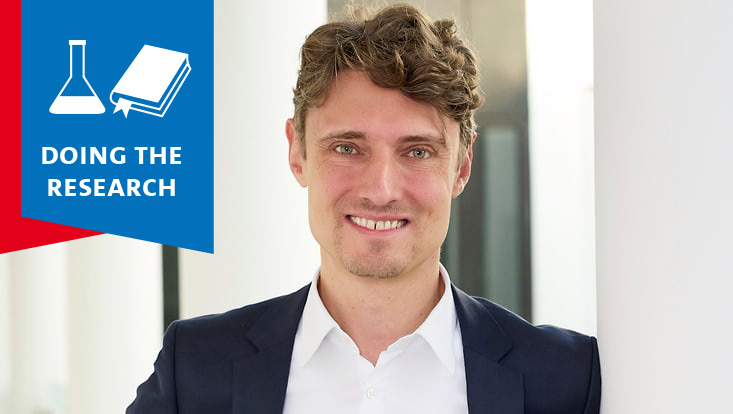
The University of Hamburg is the scientific home to more than 6,200 researchers. Every 2 weeks, we offer a glimpse into their work as part of the “Doing the research” series in the Hamburger Abendblatt. In this edition, Nils Schumacher explains how the Hanseatic city can be made even more dynamic.
Where do people in Hamburg get active, and where don’t they? Who walks to the subway, who rides a bike, and who sits all day? And how does this vary depending on neighborhood, income, or school? These questions drive my research. Because whether people are physically active isn’t just a matter of personal motivation—it’s also a matter of the environment in which they live.
In human movement and sports science, we already know a great deal about how physical activity works—about dosage, type, and intensity, as well as its preventive benefits and health effects. So far, however, we have been less successful at translating this knowledge in a way that gets more people moving on a sustainable basis. This gap is the central focus of my research. Above all, my team and I want to find out how we can create and firmly establish activity-friendly structures in a city. After all, physical inactivity and its associated consequences for people’s health are a pressing problem for our healthcare system.
Our advantage is that Hamburg, as an Active City, is one of the few regions in Germany that consistently relies on data analysis to address these issues. There is an interagency Active City strategy designed to promote more physical activity in daily life and to specifically encourage Hamburg’s residents to be active. Since 2019, I have been providing scientific support for the Hamburg Senate’s strategy at the University of Hamburg—and since 2023, I have been doing so with my team at the Science and Transfer Center Active City.
This means, among other things, that we survey physical activity habits and identify areas where support and improvement are needed. Our goal is to determine how much and where people are moving and how we can ensure that our city encourages all its residents to be more active. At the same time, we evaluate the effectiveness of measures so that successful projects can be integrated into sustainable structures. We present these findings every two years in the Hamburg Physical Activity Report.
Currently, one of our main focuses is on promoting physical activity among children—specifically, for example, on the question of how well children in Hamburg can swim. The analyses we conducted as part of the Physical Activity Report show that by the end of 4th grade, 55% of schoolchildren have at least the Bronze Swimming Badge. This figure is above the national average of 42 %. However, it should be significantly higher.
In addition, when evaluating the data, we found that the majority of children from neighborhoods with a low social index have no swimming skills before starting school and therefore have poorer prerequisites for participating in school swimming programs. In the school year 2022/23, 30% of children in Hamburg-Nord and 28% in Eimsbüttel had prior swimming skills, while in Hamburg-Mitte and Harburg, the figures were only 13% and 15%, respectively. A lack of early childhood swimming skills or water experience is a disadvantage that regular swimming lessons often cannot fully compensate for.
That is why we have launched a project to educate parents based on these findings: A physical activity guide we have developed will be distributed to parents through pediatricians and daycare centers to raise their awareness of the importance of promoting swimming skills and physical activity in early childhood. It will provide them with strategies and tips that can also be implemented at home. In addition, we are monitoring the distribution in these facilities to understand how physical activity counseling can be successfully implemented.
This illustrates just how complex it is to research the promotion of physical activity in a major city and to anchor it structurally in a sustainable way. Stakeholders from various fields must be involved, and we are collaborating closely with the local community. While sports science, with its natural science roots, typically relies on controlled studies conducted under laboratory conditions whenever possible, we need different approaches and a deep understanding of other professions and sectors. This is challenging—and incredibly exciting at the same time.
We are therefore very pleased that Hamburg offers such favorable prerequisites and openness for our research. Because if we succeed in translating our findings into new, practical methods, our projects will benefit not only Hamburg but also physical activity and health promotion in other cities and regions—as well as, of course, the entire field of research in this area.
(This content has been translated automatically.)
Dr. Nils Schumacher studied kinesiology at the University of Hamburg and earned his doctorate with a dissertation on perception and cognitive abilities in youth competitive soccer. He has been a research assistant in the Faculty of Psychology and Human Movement Science since 2016 and has headed the Science and Transfer Center Active City since 2023.