Newsroom
Newsroom
6 August 2026, by Pauli/Red.
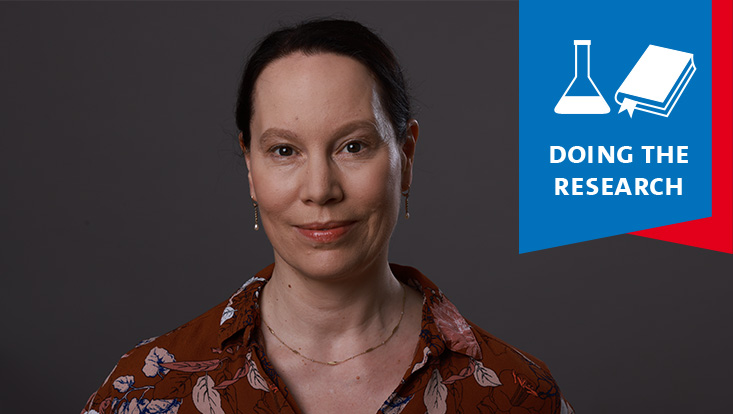
Photo: private
The University of Hamburg is the scientific home to more than 6,200 researchers. Every 2 weeks, we offer a glimpse into their work as part of the “Doing the research” series in the Hamburger Abendblatt. In this edition, Prof. Dr. Julia Pauli explains how marriage and family differ across cultures and what societies can learn from one another.
We all have very specific ideas about what a family looks like and what makes for a good marriage. But upon closer inspection, one quickly realizes that these beliefs often only make sense within specific political, historical, economic, and religious contexts. They are just one variation among many and often look different in other cultural contexts.
It is precisely these differences that interest me as a social and cultural anthropologist. I study the diversity of kinship and marriage. I have been conducting research on this topic in Mexico for more than 30 years and in Namibia since the early 2000s. I want to find out how the understanding of family and the meaning of marriage change over time, what factors play a role in these changes, and what impact this has on society. To do this, I examine birth and marriage rates, but above all, I participate in people’s daily lives and listen to them.
In 2003, I traveled to Namibia for the first time with my husband and colleague Michael Schnegg and our daughter, who was one year old at the time. We lived for a year and a half in a rural region in the north of the country. We went to church on Sundays, attended many weddings, and got involved in the community. It’s similar with my research in Mexico: During my stays, I always live with the same family. This closeness gives me direct insights into everyday life. I also conduct interviews, but people often leave out important details or behave differently than they describe. Participant observation of daily life allows for a more comprehensive understanding of ways of life.
Through my research, for example, I was able to show that marriage in Namibia has changed significantly since the 1970s. Before, marriage was a process: Families often negotiated for years over who would contribute what to the union. This served to deepen the relationship. So people weren’t simply unmarried or married; rather, they could become more and more “married” over time.
In the meantime, globalization has shifted this understanding. Wealthy couples, in particular, use lavish weddings to display their social status. The now-common wedding celebrations combine Western and non-Western rituals, making weddings very expensive. As a result, however, large segments of the population can no longer afford a wedding ceremony, even though they would like to get married. Marriage rates have declined sharply, much like in Germany.
These individual observations are part of a bigger picture; anthropologist Thomas Hylland Eriksen refers to “Large issues in small places.” When I look at how marriage, matrimony, and kinship are changing within individual families and communities, I also see global processes at work. A very important issue right now is the tension between individual freedom and social obligation and connectedness. Through global pop culture—such as Netflix series, songs, movies, and social media—certain ideas about how we should be are spreading—and this includes a strong emphasis on individuality. However, we also need other people. So how do we deal with this challenge?
My research in Mexico and Namibia shows that the foundation for a happy relationship and a fulfilling life is always a balance between these two forces. In other words, whether I succeed in realizing my own potential while at the same time engaging with my partner—which always involves compromise.
This extends beyond marriage as well. In Namibia, for example, there are working women who consciously choose to live in a community with female relatives who support one another. And in Mexico, there is the so-called compadrazgo system, which offers the opportunity to form new kinship ties. These relationships are self-chosen but are also institutionalized as stable social bonds. This means they come with rights and obligations. In light of the growing loneliness in our society, these are important insights into the pressing issues of our time.
(This content has been translated automatically.)
Prof. Dr. Julia Pauli has been a professor of ethnology in the Department of Cultural Studies at the University of Hamburg since 2011. As a social and cultural anthropologist, she conducts research primarily in Latin America and Southern Africa. She has known many of the families participating in her research for so long that she and her husband are godparents to several of their children.