Newsroom
Newsroom
17 March 2026, by Claudia Sewig
Photo: University of Hamburg / Ohme
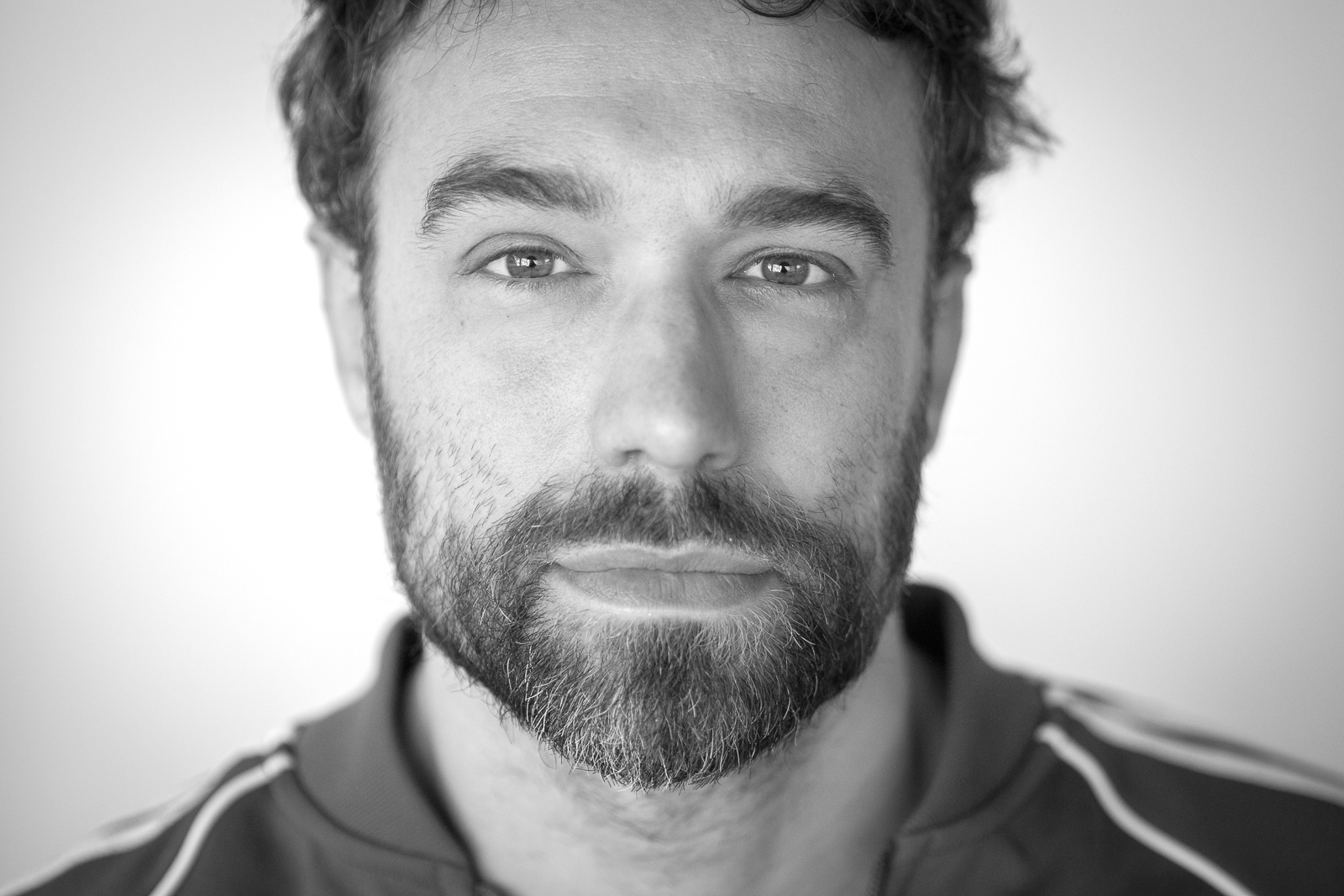
Dr Jacopo Galimberti researches political iconography and iconology at the Faculty of Humanities. As an art historian, he is investigating the online visual language of three European far-right parties as part of a project funded by the DFG.
The main goal of the project is to gain a deeper understanding of the visual strategies used by right-wing populist parties in Europe. I want to conduct the first cross-national qualitative analysis of the visual representation used by the AfD (Germany), the Lega (Italy), and the Rassemblement National (France) on Instagram, Facebook, and X.
This examination focuses on still and moving images posted since the 2024 European elections. The research will develop in-depth qualitative analyses of the subjects and motifs used, and how they are represented, and place them in an art-history context. This approach also distinguishes it from existing quantitative studies, which were more concerned with how often certain motifs were used.
Firstly, I look at the social media accounts of the parties I’m researching. I collect thousands of images, and look at what is interesting from an art-history perspective. I then compare the main motifs I have found and compare them with images from the past found in the Image Index for Political Iconography at the Warburg Haus. For example, I examine how emigrants are depicted in art history, and try to draw comparisons with contemporary portrayals of emigrants by the parties I’m investigating.
The aesthetics of these parties often employ ethnic symbols and imagery which I try to analyze from an art-history perspective. So, where do these images and symbols come from? What are they trying to tell us? What do they say about the parties, about their identity? What makes the parties so interesting and inspiring for so many people? In terms of ethnic symbolism, I'm talking about, for example, forests or little towns, or in Germany, the Hermann Memorial in Detmold. The images used by the AfD are often AI-generated, and I am trying to find out how this type of image is created.
One finding so far is that there are many visual languages. For example, the AfD tries to combine nationalist symbolism with a completely unrelated visual style. It is a futuristic vision, technology-focused, particularly in relation to nuclear energy. They are trying, at least on the visual level, to resolve these contradictions. The situation is similar in Italy. In my opinion, the European right now has a complex and diverse aesthetic, that must be taken seriously, and analyzed in a nuanced way.
That was my goal, initially. Unfortunately, the AfD has not responded to my attempts at contact. It’s also quite complicated with the French and Italian parties. However, quite a few party leaders have published books. It is also interesting that the European right today is often represented by women (e.g., Marine Le Pen, Alice Weidel, or Giorgia Meloni).
The target groups were and are very diverse. The AfD is a mainstream, populist party. What I have noticed at this early stage of my analysis, is a certain continuity, in terms of stigmatization, ethnicization, and also in how the working class is represented. For example, if you look at how the German weekly tabloid of the time, Der Stürmer, depicted Jews in the 1930s, it is very similar to how the AfD depicts migrants today using AI-generated images. This reveals a tendency towards stereotyping that becomes particularly evident at a visual level. But there are of course differences.
The AI-generated images are bright and colorful, people also refer to this as “platform realism.” It is very striking, appealing, more so than in the 1930s. In the case of the AfD, that merges an old visual culture with new trends.
I studied sociology in Italy, and then art history in Italy, France, and London. As a postdoctoral researcher, I combined my sociology and art history history knowledge and skills to examine images of a strand of Marxism, not only from a humanities perspective, but also from the perspective of art history. Then I noticed it was time to take the far-right parties seriously. Politically, of course, but also visually and culturally. And to look closely at what images they use and how those images work.
Yes, that was not an accident. I came to the University of Hamburg in 2025, as political iconology originated in Hamburg. My research draws on the tradition of the work of the art historian Martin Warnke, who lectured at the University of Hamburg from 1979 until his retirement in the spring of 2003, and on the image archive held in the Research Center for Political Iconography at the Warburg Haus that formed the backbone of his life’s work. However, this tradition has rarely engaged with right-wing imagery in the way I am doing now. So, my work aims to revitalize this art-historical movement and reposition it within the context of social media. At the same time, I am seeking to demonstrate the extent to which its visual innovations can be analyzed using tools developed in the 20th century. That is the central challenge of my research project.
Dr. Jacopo Galimberti has been a researcher at the Institute for Media and Communication in the Department of Language, Literature, Media I in the Faculty of Humanities at the University of Hamburg since the beginning of 2025. He studied sociology in Italy, then art history in Italy, France, and England. His research focus, in addition to political iconogaphy/iconology, includes the history and geopolitics of contemporary art, political culture of the far-right and radical left, and the iconography of social movements. His position is funded by the DFG for the Images of the People project.
There are approximately 6,200 academics conducting research at 8 faculties at the University of Hamburg. The Doing the Research series outlines the broad and diverse range of the research landscape, and provides a more detailed introduction of individual projects. The articles appear in the University of Hamburg Newsroom. Every 2 weeks, the Hamburger Abendblatt publishes some of them. Feel free to send any questions and suggestions to the Newsroom editorial office(newsroom"AT"uni-hamburg.de).