
Newsroom
Newsroom
21 January 2026, by Anna Priebe

Photo: Adobe Stock/solvod
Our brain is inconceivably complex and it changes every moment of our lives. In the Faculty of Psychology and Human Movement Science, Prof. Dr. Nicolas Schuck looks at what happens neurally when we experience things and remember. In the interview below, the professor of cognitive neurosciences with a focus on learning and change mechanisms talks about useful breaks, difficult insights, and untapped efficacy, among other topics.
It is definitely not the case that the brain has a kind of video recorder that records and saves everything. Research has revealed that the brain even actively steers this process. The best-known theories are those of “tagging and capture” at neural synapses, which means that there are physiological mechanisms that the brain uses to “decide” whether an experience is especially important and should have more neural resources allocated to it.
On the one hand, the events that trigger strong emotional responses, so ones that make us especially happy or sad. These feelings have a lot of hormonal and neural consequences for the processes of memory storage. On the other hand, experiences that are surprising also have an impact. We are researching this in the faculty. An event doesn’t even need to be especially emotional; it just seems to be stored at a deeper level when it is unexpected.
The so-called consolidation theory states that experiences are initially stored in a part of the brain that we call the hippocampus. Over the course of the next few hours, days, weeks, and sometimes even months, they move from this temporary storage into a long-term archive in various spots in the cerebral cortex. Emotional and surprising experiences are granted more time and we remember more details. For an understanding of memory, it is crucial to know that storage doesn’t just take place in the moment the event happens but also in the time afterwards.
Consolidation means, basically, that long-term connections are established in the cortex that, among other things, connect different sensory aspects of an experience, for example visually perceived facial features with the name of the person in question. In this way, memories become partly independent of the hippocampus, where the experience was initially stored. However, we now know that the hippocampus remains, in many cases, important for recall because it helps us to find the stored material later in the cortex.
Sleep is generally extremely important. All mammals sleep and long-term sleep deprivation can be fatal. What is interesting is that sleep is incredibly energy-intensive for our brain and not, as one might think, something that conserves energy. An important reason for the use of energy is that during this time, long-term memories are being stored. In our research, we have discovered that even short naps can help, with memory processing but also with creative processes. We could even show that so-called micro-breaks of 10 to 20 seconds can have an effect.
What an ideal break should look like, we can’t say yet. But in our studies, test subjects are asked, for example, to remember a series of images. When they take a 20-second break between 2 pictures, that already has a positive impact on memory. If they just continue sitting in front of the screen, they don’t get any new input. Our studies show that in these phases, what they just saw is reactivated in their brain. This means participants replay the series of images in their head and can better remember them. This reactivation is very important for creating long-term memory.
Participants slept for 2 nights in an MRI while we recored EEG data.
We do a lot of studies using magnetic resonance imaging, or MRI. With my research group, I worked on further developing this technology to make it useful for our research. The processes in our brain happen, as it were, incredibly fast and due to the slight imaging delay with the MRI, are not easy to depict. Now there is a procedure that allows us to see these brief, quick impulses.
At the same time, we are working with the EEG, which measures the electrical activity of the brain on the outer skull. This has greater temporal resolution than the MRI, although spatial location in the brain is not so great and we often don’t know exactly where the signals are coming from. This is why we combine both methods and in some experiments attach EEG electrodes to the test subjects who have to complete the tasks in the MRI.
In one of the most exciting studies that we have done so far, the subjects even slept for 2 nights in the MRI while we recorded the EEG data at the same time. That was incredibly complex and it took a very long time to develop it. My postdocs had several sleepless nights. The results are not yet in but they will help us better understand how memory tasks are handled by the brain during the night and saved as memories.
Yes. Typically, we show test subjects in neuroscience experiments a specific stimulus, for example, a photo of someone’s face. The MRI shows us where the brain responds. Then we show a photo of a flower and look at the differences in processing. That means we know what the person is currently processing. In our study, however, we are looking at the processes during sleep, or periods of rest; that means we have no control from the outside over what the person is recalling in the moment.
Our approach is therefore for participants to work on a task and then see what happens in the brain. Then the subjects sleep or take a break and we look at whether the same pattern is visible. This way we can see if the content is being reactivated in this phase.
Definitely. Let’s take, for example, an area of the brain that processes visual information, the visual cortex: here alone we have 25,000 data points for the MRI that provide signals every 2 seconds. If these are activated for a task, for example when a test subject needs to remember 10 different faces, we want to know how these activation patterns via these 25,000 data points differ from face to face. This is usually not humanly possible, so for the past several years we have been using algorithms for pattern recognition that strongly resemble those used in AI.
The human brain is endlessly complicated: it consists of 85 to 100 billion nerve cells and each one has roughly 1,000 connections. To describe a piece of brain the size of a grain of salt would require about one gigabyte of data. Nonetheless, scientists are trying to map this entire neural mishmash, the so-called human connectome. This will still take decades, but some researchers believe that we could then simulate the brain with a much more precise depiction.
Another school of thought prioritizes understanding principles and conceptualization. And that’s where we come to ChatGPT and friends, which are based on neural networks. These models lack many biological details; for example, there aren't differing types of receptors as there are in the human brain, but the principles of data processing are similar. And the complexity of current AI models is now approaching that of the human brain.
I think the major question is whether we conceptualize at the right place or whether important components of the brain system are being left out. For example, AI is incredibly energy-intensive, while the human brain can compute similarly with just 3 meals a day. Even the first generation of chatbots such as GPT3 needed exponentially more input than a human child—about 40 million pages of text—to learn a language. Today, it’s even more. So you see, our brain is highly effective and quick and AI cannot reproduce that. Why that’s the case isn’t entirely clear. Apparently, we still haven’t discovered all of the tricks we have learned over a million years of evolution.
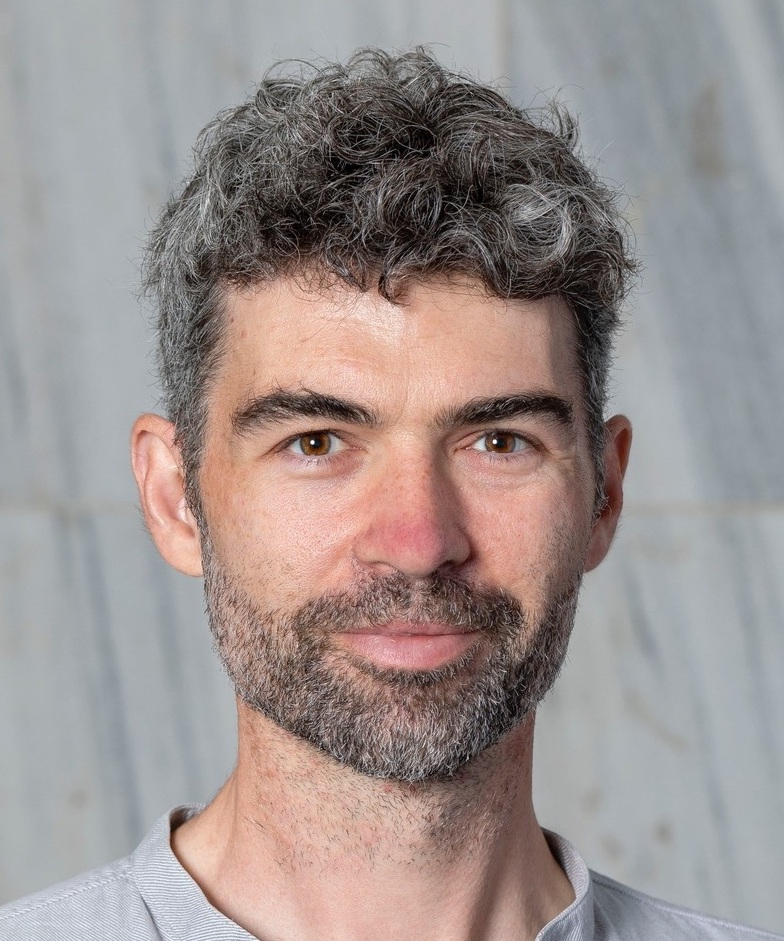
Prof. Dr. Nicolas Schuck left the Max Planck Institute for Human Development in Berlin in 2022 to join the Faculty of Psychology and Human Movement Science at the University of Hamburg. He heads the research group on cognitive neurosciences and has one of the 3 open-topic professorships at the University. These are funded within the scope of the Excellence Strategy of the Federal and State Governments. Schuck’s professorship is situated in the emerging field Mechanisms of Change.
There are approximately 6,200 academics conducting research at 8 faculties at the University of Hamburg. The Doing the Research series outlines the broad and diverse range of the research landscape, and provides a more detailed introduction of individual projects. The articles appear in the University of Hamburg Newsroom. Every 2 weeks, the Hamburger Abendblatt publishes some of them. Feel free to send any questions and suggestions to the Newsroom editorial office(newsroom"AT"uni-hamburg.de).

