Newsroom
Newsroom
3 April 2025, by Förster/Red.

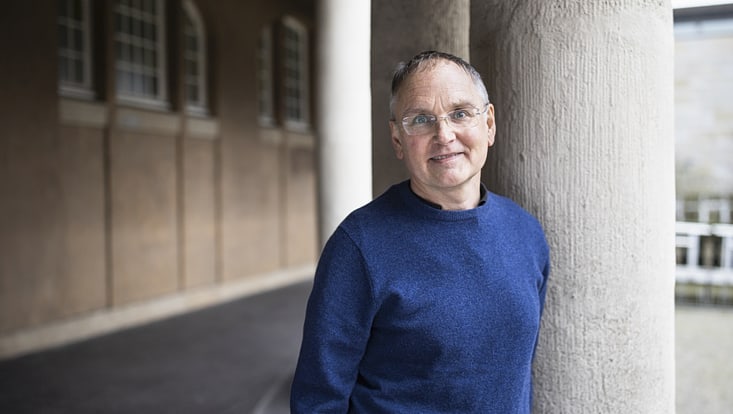
Photo: Picture People
Every year, the University of Hamburg welcomes numerous new researchers. This series introduces them and their areas of research. This time: psychologist and psychotherapist Prof. Dr. Katharina Förster.
Prof. Dr. Katharina Förster, previously of Technische Universität Dresden, joined the Faculty of Psychology and Human Movement at the University of Hamburg in Summer Semester 2025. She is professor of child and adolescent psychotherapy.
In my research, I am interested in feelings, how we process these, weaken or strengthen them, and especially, the role they play in human interactions. These processes interest me especially in people with affective disorders, for example depression and bipolar disorder, and especially in children, who have a greater risk for developing these disorders. Based on these findings, my team and I are developing and testing possible interventions to change these processes, for example, compassion-based psychotherapy.
I focus on how depression gets passed on in families. My team doesn’t just focus on family genetics, however, but rather how feelings are perceived, processed, and “passed on” through contact with other people.
I am looking forward to living again in a bike-friendly city, to the fantastic research focus areas in the Department of Psychology and at the UKE, and to cooperating with my faculty colleagues. I am especially excited about the strong focus on neuroscience research because I have a passion for neuroscience research.
I want to contribute low threshold offers to the development of the outpatient research clinic for child and adolescent psychotherapy, with the goal of facilitating better care for and study of affective disorders for the families in question. So we don’t just focus on children and adolescents but their entire families, to whom we offer different interventions that we also study.
For example, short-term interventions, also called “single-session interventions,” which should facilitate broader first aid services. We will also offer compassion-based parent training as a preventive measure so that we can provide suitable support to parents. Research and psychotherapy are closely connected in my team and we will also incorporate students into this work, for example, when they are doing their master’s theses. This allows for the optimal combination of theory and practice, giving the students a lot of experience.
To be inspired and hopefully thrilled by the way I research and teach and my topics. I am still really proud that 3 years ago someone wrote in an evaluation that he or she actually wanted to study business psychology but after attending my lecture began to have wonder whether child and adolescent psychotherapy might also be a good idea.
Generally, my teaching is very application and practice-oriented. For example, I think that you can learn diagnostic criteria outside the classroom. In my teaching, there is much greater focus on gaining an idea of what these mean for people and how that might be expressed in practice. But my teaching is also concerned with imparting an attitude that I find important when we as (prospective) psychologists and psychotherapists encounter people.
In my research I also study the neural basis of feelings and work in large imaging consortia such as the ENIGMA project alongside researchers all over the world. I also cooperate in the field of MRI research with Trinity College in Dublin. Recently. we studied how the brain develops throughout the course of depression over a span of 9 years.
Furthermore, I cooperate with leading experts in the US (James Gross and David Preece at Stanford University) in the areas of emotional regulation and in the field of compassion-based therapy in Australia (with James Kirby, University of Queensland), and in England (University of Derby, Paul Gilbert).
Affective disorders are grave and disabling psychological disorders that appear frequently within families. Better understanding underlying emotional mechanisms, also in children not affected, can contribute to developing targeted interventions to postpone or even prevent the emergence of affective disorders in the long term.