• Zur Metanavigation
  • Zur Hauptnavigation
  • Zur Suche
  • Zum Inhalt
  • Zur Subnavigation
  • Zum Seitenfuß
  • University of Hamburg
  • For journalists
  • Staff Service Portal0
  • STiNE
https://www.kus.uni-hamburg.de/aktuelles.json?recentnews=true
  • Institutions and target groups
    • Einrichtungen
      • Faculties

        • Faculty of Law
        • Faculty of Business, Economics and Social Sciences
        • Faculty of Medicine
        • Faculty of Education
        • Faculty of Humanities
        • Faculty of Mathematics, Informatics and Natural Sciences
        • Faculty of Psychology and Human Movement Science
        • University of Hamburg Business School
      • Services

        • Study Information Net STiNE
        • Surfmail
        • Exchange
        • Staff Service Portal
        • Learning Platforms
        • Katalogplus – Catalogue of Hamburg Libraries
        • SharePoint
      • Student facilities and services

        • Campus Center
        • Career Center
        • PIASTA
        • AStA (student council)
        • University Sports
        • University Music
        • Family Office
        • University Language Center
        • General Languages
        • Office of Affairs for Students with Disabilities or Chronic Diseases
        • Departmental libraries
        • Healthy Campus
      • Further facilities and services

        • The Cluster of Excellence CLICCS
        • The Cluster of Excellence CUI
        • The Cluster of Excellence Quantum Universe
        • The Cluster of Excellence Understanding Written Artefacts
        • Hamburg Research Academy
        • Pier Plus
        • Hamburg Center for University Teaching and Learning (HUL)
        • Hub for Crossdisciplinary Learning (HCL)
        • CEN
        • Museums and collections
        • University Archives (in German)
        • Regional Computing Center (RRZ)
        • University Administration
        • Knowledge Exchange Agency
        • The Unikontor Shop (in German)
    • Target groups

      • Prospective students
      • Students
      • International prospective students
      • Young researchers
      • Researchers
      • Instructors
      • Staff
      • Prospective continuing education students
      • Alumni
      • Journalists
      • Refugees (in German only)
    Close
  • Language
    • English
    • Deutsch
  • /en/newsroom/sitemap.json
University of Hamburg - to research, to teach, to educate and form, to homepage
Newsroom
Newsroom
  • Newsroom
  • Press releases
  • Social media
  • Videos
  • Events
  1. UHH
  2. Newsroom
  3. Research
  4. An interview with Professor Günter Sigl

Solving the conundrumParticle showers from far-off galaxies

19 October 2017, by Viola Griehl

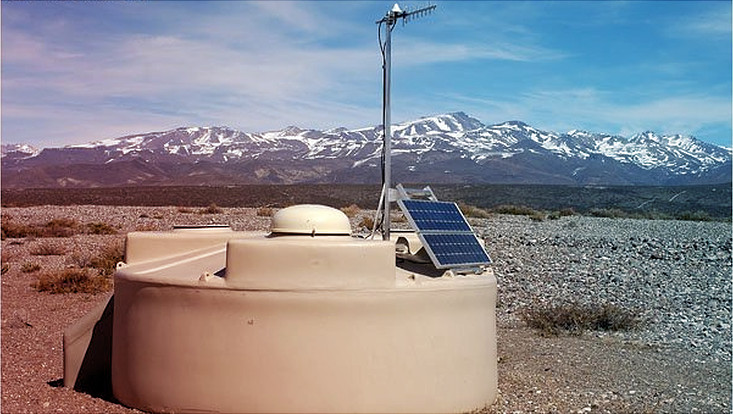
Pierre Auger-Observatorium in Argentinien

Photo: www.auger.org/ Guillermo E. Sierra

The Pierre Auger Observatory in Argentina is the world’s largest hybrid detector to study high-energy cosmic rays.

Radiation from outer space continuously reaches Earth in the form of electrically charged particles. While many hail from the sun, there are also extremely energy-rich particles whose origins have remained unexplained since their discovery in the 1960s. Over 400 researchers from 18 countries are researching this phenomenon at the Pierre Auger Observatory in Argentina, the world’s largest hybrid detector to study high-energy cosmic rays. The researchers have now discovered that the rays come from outside our solar system and, with great probability, outside our own galaxy. As part of a collaborative project under the aegis of the Federal Ministry of Research, Prof. Dr. Günter Sigl from the Institute for Theoretical Physics II is heading a team from Universität Hamburg that will also take part in the research.

Prof. Sigl, what exactly is a cosmic particle shower?

Particles smaller than atoms penetrate the atmosphere with the energy of a tennis ball hit with a hard swing. When they interact with molecules in the air, they split into so-called “secondary particles.” These are, for example, pions, meaning particles of about one-tenth the mass of a proton. These interact in turn with the atmosphere and create more secondary particles, resulting in a cascade. This atmospheric shower continues until the energy per particle no longer suffices to produce further pions. The Pierre Augur experiment allows us to measure the by-products of these particles.

The mystery consisted in the unexplained origins of certain high-energy particles. When were these rays discovered and how can you even trace them?

In 1912 Viktor Hess discovered that at greater altitudes, electroscopes (instruments for measuring a body’s electrical charges) discharged more quickly above Earth’s surface. This could only be explained by ionizing radiation from outside Earth’s atmosphere. In 1938 Pierre Auger—for whom the experiment has been named—discovered coincidental signals in particle detectors separated by several meters, indicating the existence of expansive atmospheric showers. In the Pierre Auger experiment, researchers are trying to prove these showers using photomultipliers—extremely sensitive light sensors. They capture signals catalyzed by electrons, positrons, and muons. The atmospheric showers also create flourescent rays that you can see with a telescope.

How did you find out that rays come from outside the Milky Way?

The detectors measure the particles’ direction of arrival. If the sources were located in our Milky Way, the direction of arrival would have to appear closer to our galaxy. The surplus of roughly 12% of particles arriving from one half of outer space relative to the particle rate from the other half indicates, however, a direction 120 degrees away from the galactic center.

What role does your team play in the project?

The Hamburg group is a team of phenomenologists. That means we describe processes and characteristics using theoretical models and we work at the junction of the experiment and astrophysical scenarios to interpret the data. In particular, we simulate cosmic ray distribution while focusing on interactions and perturbations in cosmic magnetic fields.

What happens next?

We will try to determine the sources of these particles. To do so, we will compare measurement results with model predictions and simulate arrival directions using various hypotheses for the distribution of sources and magnetic fields. We want to find out which combination of protons and light and heavy atom nuclei we are dealing with. We are also working with particle physics groups at Universität Hamburg to do this.

Latest articles

Prof. Dr. Helena Herr

Photo: L. Hickmott

13.10.2025|Forschung
“Whales make you happy”: Prof. Dr. Helena Herr strengthens the marine sciences
Every year, the University of Hamburg welcomes numerous new researchers. This series introduces them and their areas of research. This time: marine biologist Prof. Dr. Helena Herr.
Meeresströmungen

Photo: CEN Climate Visualization Laboratory

25.02.2025|Forschung
Weaker ocean circulation could cost trillions
A major motor for the global climate is beginning to falter: a massive system of ocean currents called the Atlantic Meridional Overturning Circulation (AMOC), which also includes the Gulf Stream. As a new study conducted by experts at the University of Hamburg’s Cluster of Excellence for climate...

Last update: 28 December 2017

  • Feedback
  • Legal notice
  • Privacy statement
  • Accessibility
  • Site map

University of Hamburg

Innovating and Cooperating for a Sustainable Future in a Digital Age

  • Instagram
  • Facebook
  • Bluesky
  • YouTube
  • LinkedIn
    • Studies
    • Prospective students
    • Continuing education
    • Research
    • Teaching at UHH
    • Doctoral studies
    • Job opportunities
    • Knowledge exchange
    • University
    • Excellence
    • Faculties
    • Alumni
    • Contact
    • Campus Navigator
    • Emergencies, safety and security
    • Antidiscrimination
audit familiengerechte hochschule
Audit
HRK-Audit
System accreditation

© 2025 University of Hamburg. All rights reserved

OBVZu9