Newsroom
Newsroom
10 November 2025, by Thomas Merten

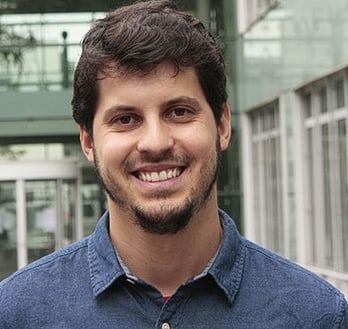
Photo: Rafa Neddermeyer/Cop30
In the Cluster of Excellence Climate, Climatic Change, and Society (CLICCS), Brazilian-born sociology professor Eduardo Gonçalves Gresse is researching how international climate conferences work. He is taking part as an observer in this year’s UN Climate Change Conference in his native country, and says he is cautiously optimistic.
I am really happy that the COP is happening, of all places, in Brazil. After years of multiple crises and anti-ecological regression under the former Brazilian president Jair Bolsonaro, the current president, Lula da Silva, has announced that the next conference should take place here, in the heart of the Amazon. This is a political signal to bring Brazil, with its strong diplomatic tradition and its actual leadership role in global environmental politics, back to the international stage. The country has a long tradition: from the World Social Forum in Porto Alegre to the Rio Conference in 1992.
Belém is a lively, multicultural city at the edge of the rain forest. I was born and raised in São Paulo but I was often in Belém as a child. It is totally different, even its cuisine. In Belém, you can find an impressive variety of fruits and foods that are virtually unknown in other regions of Brazil or in the world. And local art and culture are also fascinating. At the same time, the city, like many large Brazilian cities, has extensive social inequality.
For decades, Brazil had a strong diplomatic tradition as a mediator between the Global North and South. During the Bolsonaro years, from 2019 to 2022, the country turned into a political vacuum. Jair Bolsonaro did not dare, however, to pull out of the Paris Agreement. He would have gained little. But in fact, his government fought everything that the agreement stands for. President Lula is trying to restore Brazil’s former role. Yet while the deforestation of the rain forest is proceeding more slowly, there is once again a search for oil. Lula says his country wants to forego fossil fuels in the future, but he also says he is “realistic” and that the world is not ready to live without oil. This shows that Brazil plays an ambivalent role. On the one hand, the COP30 president André Corrêa do Lago is a diplomat with a background in economics and the climate. He and his team have the expertise and will advocate for strengthening financing and cooperation with regard to climate protection and climate adaptation. On the other, Brazil is an important oil producer and its national environmental policies are always in the crossfire.
With cautious optimism that the COP30 might actually be the “COP becoming reality” conference, as Lula and the COP president have promised. At the general meeting of the national and government leaders a few days ago in Belém, Lula himself said that we need a way to reverse deforestation, fairly and with a plan, as well as to overcome our dependency on fossil fuels, and to mobilize the necessary resources to reach these goals. For this to be realistic, it is important, he said, that the conference produces new alliances, especially now, in the crisis of multilateralism. The United States are turning against climate protection, there are wars, tension, and steps backwards. So it is even more important that countries like Brazil mediate and show that international cooperation towards climate protection and justice is still possible.
I will be at both the official COP as well as at the parallel conference for civil society, the Cupulo dos Povos. The connections between policymakers, research, and civil society are, for me, the exciting thing about Belém.
Our international research team with people from Brazil, France, and Germany are working there on an collective ethnography. We are looking at the conference itself: the negotiations, the rituals, the promises. How do narratives emerge and what power do they have? What is especially interesting for me is how the negotiations in Brazil are being performed and how the global goal for climate change adaptation is being negotiated and implemented. This is much more complex than the topic of reducing greenhouse emissions, because climate adaptation, for example flooding or extreme heat, is a process that is constantly evolving and must always incorporate local conditions.
See the CLICCS website for a longer version of this interview.
Eduardo Gonçalves Gresse is a sociologist and currently an acting professor at the University of Hamburg. A central topic of his research is how societies respond to climate change and which factors foster or hinder socioecological transformation. He also looks at how different knowledge systems (for example, indigenous knowledge) can be integrated into climate research and policy. As a co-editor of the Hamburg Climate Futures Outlook, he developed methods to evaluate the societal plausibility of different climate futures. Gresse is a co-founder of the Instituto Terroá NGO, which supports local sustainability initiatives in Latin America.