
5 August 2026
Global studyMigration around the globe: How butterflies are reacting to climate change
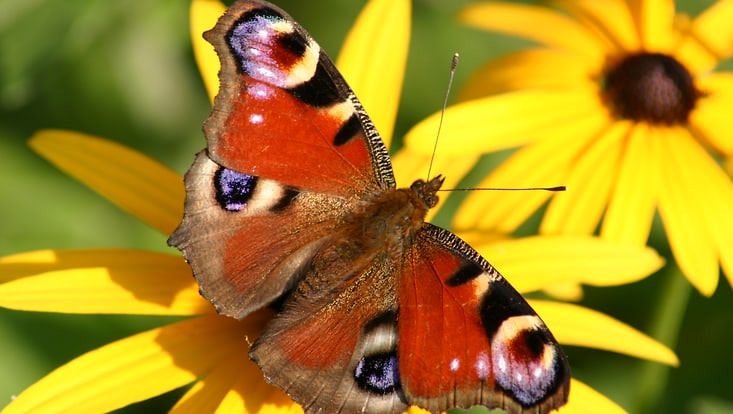
Photo: UHH/T.Wasilewski
Butterflies are widely considered to be a valuable “early warning system” for environmental changes, as their reactions to e.g. climate change are rapid and pronounced. An international team of researchers has just taken a closer look at how often, and in which direction, these species’ habitats are shifting.
To do so, they reviewed 7,000 studies from 105 countries. They analyzed data reaching back to 1991 and interviewed experts from 49 countries, who contributed standardized assessments of the regions in which certain species’ habitat shifts had taken place and the main direction of said shifts.
Dr. Kerstin Jantke from the University of Hamburg’s Cluster of Excellence “Climate, Climatic Change, and Society” (CLICCS) and her colleague Luisa Gensch, who conducts research at the University of Hamburg and the Max Planck Institute for Meteorology, gathered the data from the German-speaking countries. “By combining international academic publications, the opinions of local experts, and non-English sources, we arrived at a much more comprehensive image of global range shifts than is possible using conventional data gathering,” says Dr. Jantke.
Taken together, the experts gathered more than 6,000 indications of range shifts and determined that roughly 80 percent of the species had extended their range and, in response to climbing temperatures, had expanded into other suitable areas. At the same time, roughly a quarter of the species had abandoned their native habitat and switched to areas located at either higher or lower elevations.
According to Jantke, this situation is extremely problematic for tropical butterflies, as they have already been pushed to their maximum temperature tolerance. “Here, even a minor further warming of the climate could rapidly lead to the loss of species, especially since the destruction of habitat in the tropics shows no signs of slowing down.”
Although the occurrence of individual species was not recorded in the study, there are indications of declining populations worldwide, including in Germany, which Jantke deems to be call for concern. Consequently, she argues, improved, international monitoring programs and taking into account the needs of insects when planning nature reserves are urgently needed.