
Newsroom
Newsroom
11 June 2026, by Anna Priebe

Photo: AdobeStock/imageBROKER
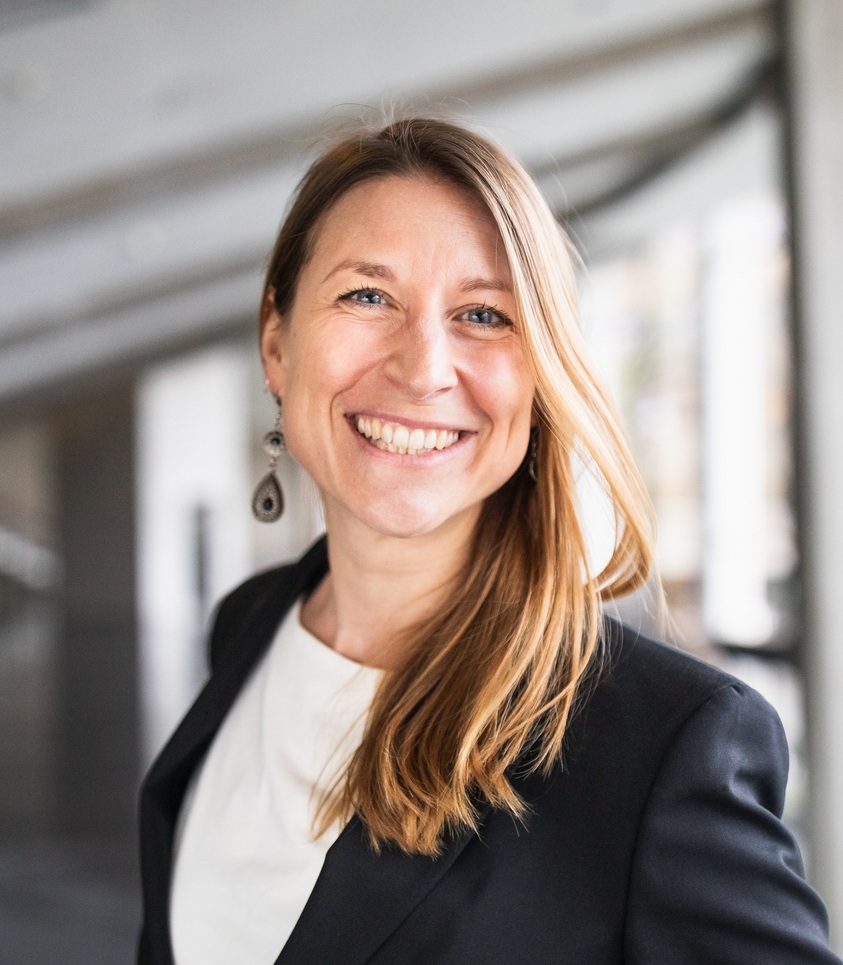
In Germany, your background still plays a pivotal role in your educational success. And on the job search, many people face disadvantages due to their family background. To change that, Prof. Dr. Kira Weber from the Faculty of Education at the University of Hamburg is looking at career guidance opportunities, how to improve them, and what role AI can play.
It’s very heterogeneous. In Hamburg, you can get career guidance through AvDual, for example, which offers preparatory vocational training. AvDual also has special offers for high school students from immigrant backgrounds (AvM Dual) with individualized teaching and learning concepts. Other German states such as Saxony-Anhalt are currently transforming their systems. North Rhine-Westphalia, for example, takes a completely different approach. There is no uniform nationwide approach.
As part of our Startchancen subproject, we are taking a look at all of the ways the German states support schools and teachers providing career guidance. Our first step was to research all of the offers and concepts for career guidance and the offices responsible. It was important for us to know whether existent programs had already been evaluated and to develop quality criteria for concepts and materials. This is the only way to determine which approaches should be used across the board.
That’s the goal. We have created a leaflet for schools and teachers in every federal German state consolidating all of the information about the requirements and materials for career guidance. The leaflets also include the contact details for the governmental offices. We want to make this overview available to schools on the Startchancen platform.
We are currently creating a “positive” list, but many of the programs haven’t been evaluated yet. One project that we found really compelling is the nationwide mentoring program VerA, which aims to prevent young people from dropping out through individual supervision. Another example is the BeSOS model developed in Saxony, which provides career guidance for high school students with psychological difficulties. We definitely want to find a way to make these initiatives better known.
For example, we offer ChancenTalk, to which we invite representatives of all federal German states to share their experiences. It’s an opportunity to talk to colleagues about concepts and best practices and to network. Our next conference is taking place in September in Potsdam as part of the Chancen program conference days. The focus is career guidance, self-regulation, and social and emotional skills. Administrators and practitioners will come together to learn from one another.
Of course, young people are using AI for career guidance.
AI is radically changing all areas of our lives and naturally young people use it to orient themselves professionally. It’s also a great opportunity: studies have revealed that younger people are less hesitant to talk to AI and that they ask questions more openly or express their reservations or doubts. On the other hand, the feedback is often very general, also because young people don’t always provide specific prompts. For example, some niche professions are not really visible and that strongly affects career orientation.
Definitely. My doctoral researcher and I are both working intensively on AI and jointly planning the development of a specialized chatbot with the non-profit App Camps. We want to run a first test at a school in Munich. We will divide the school students into four groups: One will talk about career prospects using ChatGPT, one with our AI chatbot, a third will receive personal coaching from a human being, and fourth, hybrid group will work first with the AI chatbot and then with a human coach. We want to find out which pathway works best.
At the end, there should definitely be a monitoring system in place to find out whether career guidance measures work and to see how effective they are, meaning both those that already exist and those that are developed within the scope of the project. The Institut für Bildungsmonitoring und Qualitätsentwicklung in Hamburg, for example, tests ninth graders’ educational development every year using the KERMIT survey.
We succeeded in having a section included on career-planning skills. This involves a self-assessment and information, for example, about whether young people have looked for information about different professions in the months prior, whether they already know what kind of career they might want, and where their strengths lie. If we want to know how career-planning skills evolve in the long term, this kind of standardized monitoring is essential. And for the Startchancen schools, it’s important to know, of course, whether the money invested has been used well. Documenting career-planning abilities within the scope of KERMIT is already a great first step.
The Federal Ministry for Education, Family Affairs, Senior Citizens, Women and Youth is providing €100 million for scientific evaluation and support for the Startchancen Program. In addition, the federal and state governments will be providing schools with a high rate of disadvantaged students another €20 billion over the next 10 years. Prof. Dr. Kira Weber is a professor of education with a focus on vocational education in the Faculty of Education. She will receive €600,000 in the first funding period for her project to take stock of and improve career counseling at the participating schools.
There are approximately 6,200 academics conducting research at 8 faculties at the University of Hamburg. The Doing the Research series outlines the broad and diverse range of the research landscape, and provides a more detailed introduction of individual projects. The articles appear in the University of Hamburg Newsroom. Every 2 weeks, the Hamburger Abendblatt publishes some of them. Feel free to send any questions and suggestions to the Newsroom editorial office(newsroom"AT"uni-hamburg.de).

