Contents
Excellent research conditions
Clusters of excellence
Since 2019, the University of Hamburg has received funding for 4 clusters of excellence. In these research alliances, researchers tackle questions in astrophysics, climate, photon science, and written artifacts.


Photo: UHH/Vogiatzis
Excellent conditions for work and research
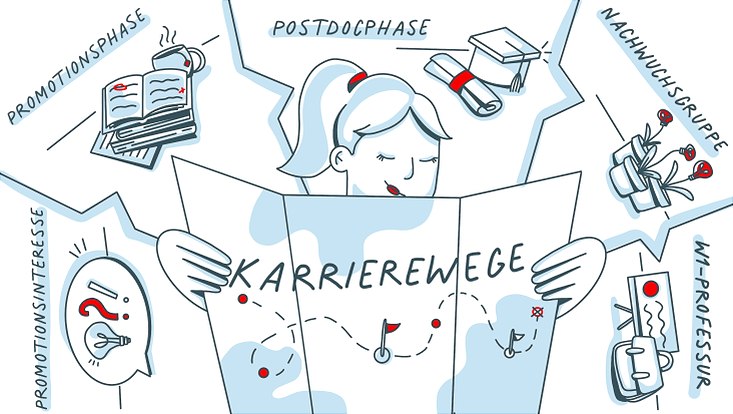
Photo: UHH/Vogiatzis
Whether research, teaching, or research management: Prospective or current doctoral researchers, postdoctoral researchers, and early career research group leaders can find attractive career paths, excellent employment conditions, and various kinds of support at University of Hamburg, to produce outstanding qualified people in research and teaching, and promote future careers inside and outside of academia.
Academic career opportunitiesWho does research on what at the University of Hamburg?

Photo: UHH/Schatz
Our research portal FIS (Research Information System) provides a comprehensive overview of researchers, research projects, co-operations and scientific activities at the University of Hamburg. Thanks to a wide range of search and filter options, information on individual projects can also be researched specifically.
Research portalFlagship for regional research alliances

Photo: UHH/Esfandiari
For us, global visibility goes hand in hand with valuing our region. In close cooperation with our partner institutions in Hamburg, we are actively developing the strategic science platform PIER PLUS with the goal to further strengthen Hamburg's position as a leading international science metropolis.
Pier PlusDonations and Endowments

Photo: UHH/Esfandiari
Support research and teaching at the University of Hamburg. With a donation or endowment, you can fund a specific project, enable sustainable investments in state-of-the-art equipment, or actively shape science through an endowed professorship. Together, we will find the right way for you to get involved!
Donations and EndowmentsResearch news


Photo: UHH/Engels
22 July 2026|ForschungWhat impact does immigration have on species extinction?
The UHH is home to more than 6,200 researchers. Every two weeks, in the “Doing the Research” series in the *Hamburger Abendblatt*, we provide insights into their work. In the current issue, Prof. Dr. Matthias Glaubrecht, professor of animal biodiversity, explains how new species affect our ecosystems.
Photo: privat
17 July 2026|ResearchWelcome Aboard: Prof. Dr. Carolin Brinkmann strengthens the University of Hamburg Business School and the HCHE
Every year, numerous new researchers join the University of Hamburg. In this series, we introduce them and their fields of research. This time: Health economist Prof. Dr. Carolin Brinkmann.
Photo: UHH/Feuerböther
9 July 2026|ForschungDoing the Research: Do We Say “Deaf” or “Hard of Hearing”?
The UHH is home to more than 6,200 researchers. Every two weeks, in the “Doing the Research” series in the *Hamburger Abendblatt*, we provide insights into their work. In the current issue, Prof. Dr. Liona Paulus explains why sign language interpreting is so important.
Photo: Dorothea Baumann
2 July 2026|ForschungWelcome Aboard!: Prof. Dr. Theresa Bockelmann strengthens the University of Hamburg Business School
Every year, numerous new researchers join the University of Hamburg. In this series, we introduce them and their fields of research. This time: business economist Prof. Dr. Theresa Bockelmann.
Photo: UHH/Esfandiari
25 June 2026|ForschungDoing the Research: How Can Sustainable Digitalization Succeed?
The University of Hamburg is the scientific home to more than 6,200 researchers. Every 2 weeks, we offer a glimpse into their work as part of the “Doing the research” series in the Hamburger Abendblatt. In the latest issue, Prof. Dr. Jan Recker explains how manufacturing companies can also become more environmentally...
Photo: AdobeStock/imageBROKER
11 June 2026|ForschungDoing the Research: For greater orientation when providing career guidance to young people
In Germany, your background still plays a pivotal role in your educational success. And on the job search, many people face disadvantages due to their family background. To change that, Prof. Dr. Kira Weber from the Faculty of Education at the University of Hamburg is looking at career guidance opportunities, how to improve...